author avatar
    Technology Manager of Test Dept.
Last update by James Smith at 29 September 2026

Summary
This guide outlines the technical processes and software solutions required to convert multilingual handwritten notes to Word using optical character recognition. It evaluates both cloud-based AI models and local desktop applications, detailing image preparation, language settings, and batch processing capabilities for optimal transcription accuracy.


Multilingual Handwritten Notes to word
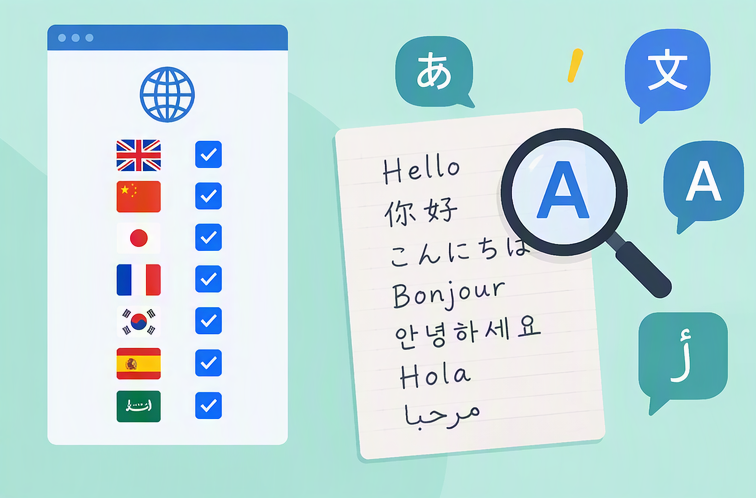
Handwritten notes are often created in a hurry. For example, a student might jot down an English definition, add a Hindi translation beside it, and then switch back to English. A researcher could mix Spanish field notes with English technical terms. Later, these pages need to be turned into searchable, editable Word documents.
The challenge is that handwriting OCR isn’t as robust as printed text recognition. It has to contend with irregular strokes, cursive connections, varying writing angles, and multiple scripts on a single line. When the script changes abruptly, OCR might skip words, misinterpret characters, or output garbled text. Even minor errors can alter formulas, names, dates, or technical terms—making the results unreliable.
Screenshot of pasted text showing unreadable symbols instead of the original paragraph, typical of embedded font PDFs.
Often, the exported Word file may look fine at a glance but requires extensive correction. For multilingual handwritten notes, the main obstacles are poor contrast, crowded lines, heavy cursive, and language settings that only recognize one script at a time.

Before you start: check note quality, language mix, and OCR readiness

OCR accuracy relies heavily on the quality of your source material and proper settings. Before choosing a tool or uploading anything, review your physical or scanned page. Small improvements here can save more time than any software adjustment later.
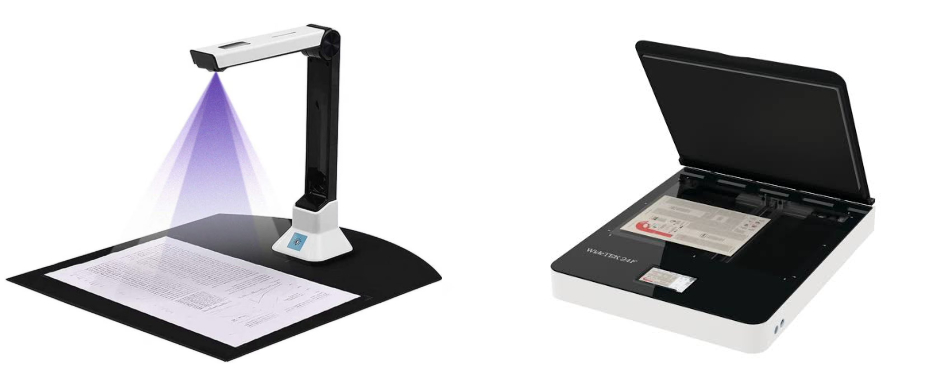
Camera scanner vs flatbed scanner comparison diagram, showing uneven lighting and skew on the camera scan versus a flat, evenly lit flatbed scan.
Factor Good sign Risk sign Action

Blur/lighting

Sharp, evenly lit text

Shadows, low contrast, faded ink

Rescan or adjust image brightness

Cursive vs. print

Mostly printed letters

Heavy cursive or connected strokes

Use a stronger OCR mode or reprint

Single vs. mixed language

One script per page

Multiple scripts in the same line

Select all languages or split the page

Image vs. scanned PDF

300 DPI scan or clear photo

Low-resolution or compressed image

Re-export at higher quality

Page layout

Straight lines, clear margins

Tilted text, tight spacing, colored backgrounds

Crop, rotate, or improve contrast

A simple rule for non-technical users: if you struggle to read the page, OCR will have even more difficulty.

Common ways to convert handwritten notes to Word

There are three main approaches to converting handwritten notes to Word, each with its own balance of cost, privacy, and multilingual accuracy:
- Free online OCR: No installation is required, but most online OCR tools perform poorly with cursive handwriting or mixed-language notes. Free services often restrict file sizes and page counts. AI-powered tools such as Microsoft Copilot and ChatGPT typically handle multilingual handwritten content more effectively, whereas many traditional OCR websites are optimized for printed text and provide limited support for multilingual handwriting.
- Microsoft Lens / OneNote: Free and built into Microsoft accounts, but language support is limited. Best for neat, printed text; struggles with messy handwriting.
- Dedicated desktop OCR: Paid and requires installation, but delivers stronger multilingual support, batch processing, and offline privacy. This is usually the most reliable choice for sensitive or lengthy documents.
The next sections compare an online AI approach and a local desktop solution.

Big AI Models

Large AI models like ChatGPT, Google Gemini, or Claude allow you to upload images and extract handwritten text—even from mixed-language pages. These models often outperform older, single-language OCR tools because they understand a wide range of languages. You simply tell the AI which languages are present, and it returns digital text you can paste into Word.
However, their accuracy still depends on the clarity of your handwriting. Multilingual recognition can falter when two scripts appear on the same line, when ink is faint, or when cursive dominates.

The primary concern is privacy: your files are processed on external servers, so personal, medical, financial, or confidential notes may be at risk. These tools are best for non-sensitive study notes, drafts, and general content.

Always review the output, as AI may skip lines, guess words, or translate instead of transcribing.
Advantages:
  • Good at interpreting messy mixed-language handwriting
  • No installation required
  • Can output clean text with simple prompts

Disadvantages:

  • Uploads files to external servers
  • Accuracy varies with cursive and complex layouts
  • May require manual copy/paste or cleanup

Do not upload confidential, medical, financial, or company notes to online AI tools.

A sample prompt:

Transcribe the handwritten note. The languages are English and Hindi. Keep the original line breaks and do not translate.

After conversion, compare the Word text to your original image, especially for names, numbers, formulas, and secondary-language words.
Online AI models are quick and convenient, but not suitable for confidential notes. If privacy or batch processing is important, a local desktop OCR tool is the better choice.

Renee PDF Aide Advanced AI Model (Local App)

Renee PDF Aide is a Windows desktop PDF conversion and editing suite that works entirely offline. It offers high-speed batch conversion and advanced OCR for scanned PDFs and images—making it ideal when you need to convert multilingual handwritten notes to Word without sending sensitive documents over the internet. The software converts PDFs to and from Word, Excel, PowerPoint, Markdown, images, and more, and includes tools for merging, splitting, repairing, encrypting, and optimizing PDFs.
Turn Handwritten Notes and Scanned PDFs into Editable Text with OCR

Convert to Editable Convert to Word/Excel/PPT/Text/Image/Html/Epub

Multifunctional Encrypt/decrypt/split/merge/add watermark

OCR Support Extract Text from Scanned PDFs, Images & Embedded Fonts

Quick Convert dozens of PDF files in batch

Compatible Support Windows 11/10/8/8.1/Vista/7/XP/2K

Convert to Editable Word/Excel/PPT/Text/Image/Html/Epub

OCR Support Extract Text from Scanned PDFs, Images & Embedded

Support Windows 11/10/8/8.1/Vista/7/XP/2K
Free TrialFree TrialNow 800 people have obtained the free version!
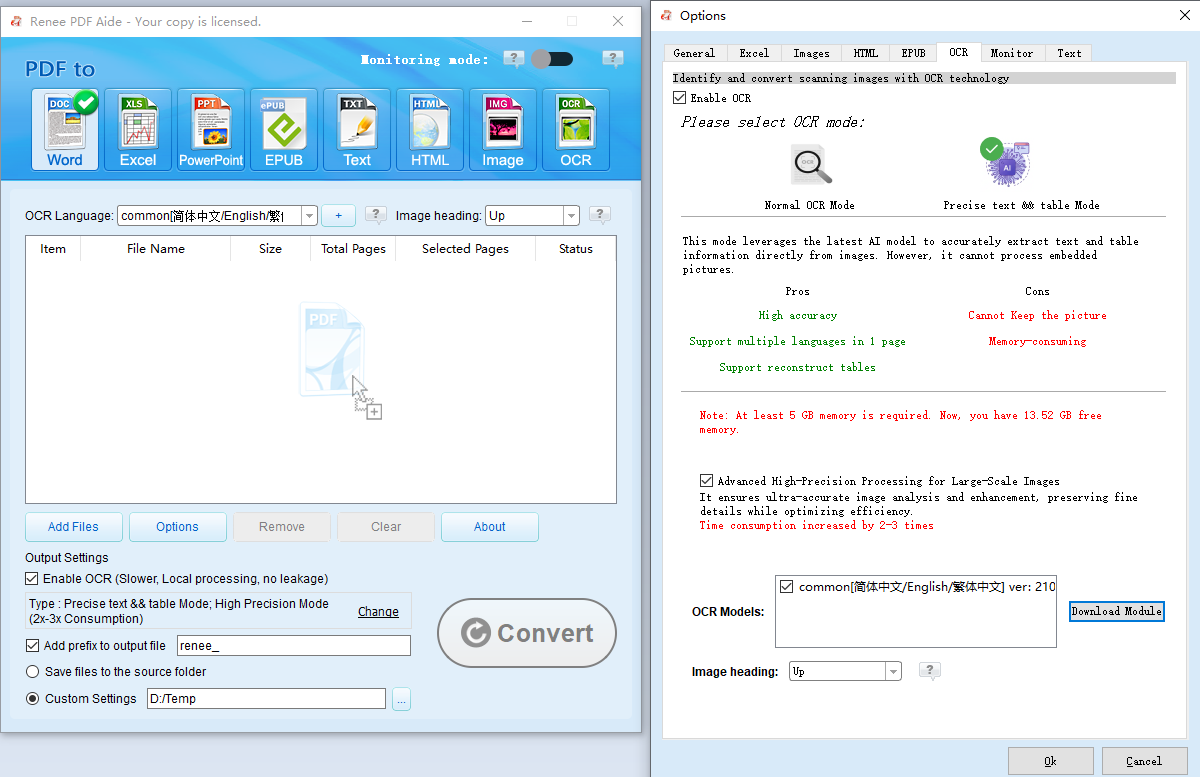
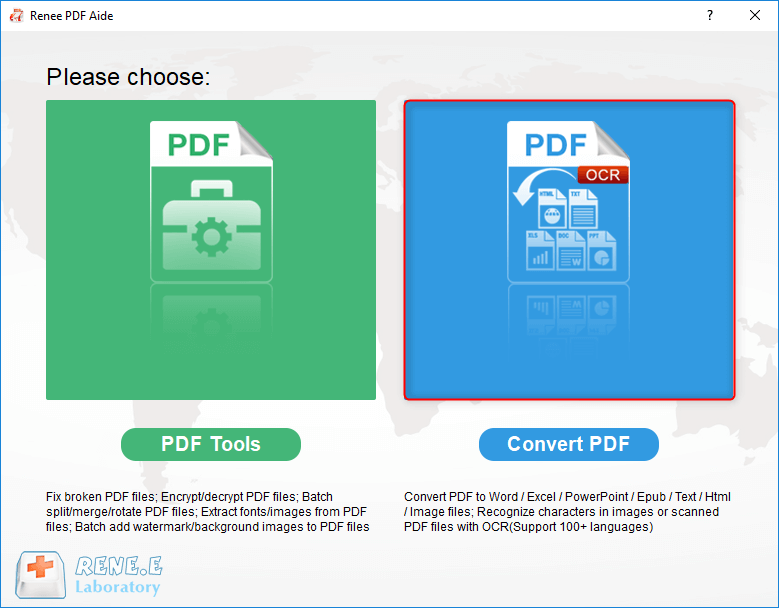
For handwritten scans, the workflow is straightforward: import your scanned PDF or image, select Word as the output format, enable OCR, choose the mode designed for picture-based text, convert, and then proofread the result. As always, OCR accuracy depends on clear scans and the correct language or mode settings.
select to convert pdf with renee pdf converter
Renee PDF Aide PDF OCR with multi language AI models
Advantages:
  • Works completely offline for sensitive notes
  • Batch conversion for multiple pages
  • Advanced OCR for scanned images and embedded fonts
  • Broad format support including Word, Excel, and Markdown

Disadvantages:

  • Windows only
  • Paid after trial
  • Advanced OCR mode can be slower

FAQ

Can OCR recognize mixed languages in a single handwritten note?

Yes, many OCR engines can recognize mixed languages, but accuracy depends on the scripts, handwriting clarity, and language settings. When two languages appear on the same line, errors are more likely. Use a clear scan, select all relevant languages if possible, and proofread the exported Word file carefully.

What image quality is required for accurate handwriting OCR?

A 300 DPI scan or a sharp, evenly lit photo delivers the best results. Avoid shadows, faded ink, heavy compression, and tilted pages. For small or cursive handwriting, higher resolution and better contrast are even more important.

Does Renee PDF Aide work completely offline?

Yes, Renee PDF Aide is designed for offline use. Your scanned PDFs and images remain on your device, helping protect private and sensitive documents.

User Comments

Page 1

Leave a Comment


Your comment has been submitted and is awaiting moderation.