author avatar
    Senior Program Developer
Last update by Emma Johnson at 18 May 2026

Summary
This guide covers the essential processes for cloning c drive to new ssd, including preparation steps, professional software recommendations, and detailed migration methods. It addresses common boot issues, troubleshooting procedures, and post-clone optimization techniques to ensure a successful storage upgrade.


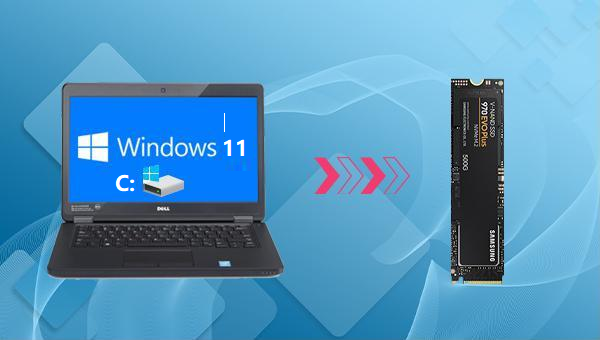
Cloning your C drive to a new SSD is the simplest way to upgrade your storage while keeping Windows, your programs, and all your files exactly as they are. This guide walks you through when to clone, how to prepare, why Renee Becca makes the job easy, and what to do if the new drive won’t boot. You’ll also find post-clone tips to get the best performance from your new SSD.
Clone C drive to SSD

Common Scenarios That Require Cloning Your C Drive to a New SSD

Most people decide to clone their C drive when they’re chasing better speed or more reliable storage. Here are the three situations we see most often:
  • Scenario A: Your old mechanical HDD is dragging everything down. Boot times take 30 to 60 seconds or more, and programs feel sluggish to open. An SSD fixes that almost overnight.
  • Scenario B: Your current SSD is nearly full—less than 10% free space left. Windows updates fail, you can’t install new software, and the system feels cramped.
  • Scenario C: Your drive is showing clear signs of failure. That includes S.M.A.R.T. errors, strange clicking or grinding noises, or random crashes that put your data at risk.
AspectOld DriveNew SSD

Boot Time

30–90 seconds

5–15 seconds

App Load Speed

Slow, with delays

Near-instant

Available Space

Limited

More room after migration

Reliability

Prone to mechanical failure

More durable, no moving parts

Signs you need to clone immediately (not just backup): Frequent Blue Screen errors, performance that stays bad even after cleanup, or warnings from your drive health tool.
Two free diagnostic tools can help you spot trouble early:
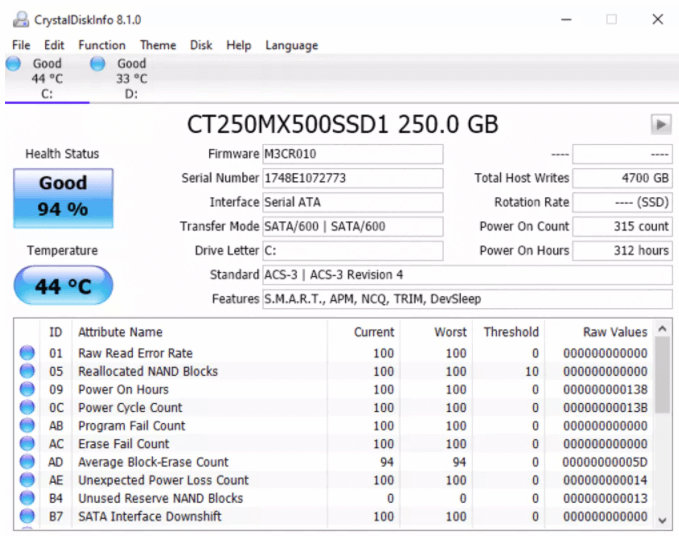
CrystalDiskInfo – Shows S.M.A.R.T. status, temperature, and estimated remaining life. The downside? It might miss some advanced controller issues.
Screenshot of CrystalDiskInfo displaying SSD health status
WMIC (via Command Prompt) – Run wmic diskdrive get status for a quick health check. It’s fast but offers very limited details compared to dedicated software.
Pre-Clone Preparation: Hardware Setup and Windows Boot Requirements

1. Understanding Modern Windows Boot Configuration

Modern Windows systems use UEFI with GPT partitioning instead of the older Legacy BIOS with MBR. Why does that matter? Because cloning has to preserve the correct boot mode. Get it wrong, and the new SSD simply won’t start.
Common boot-related problems include Secure Boot conflicts, the wrong boot order in BIOS, and BitLocker encryption locking the drive.
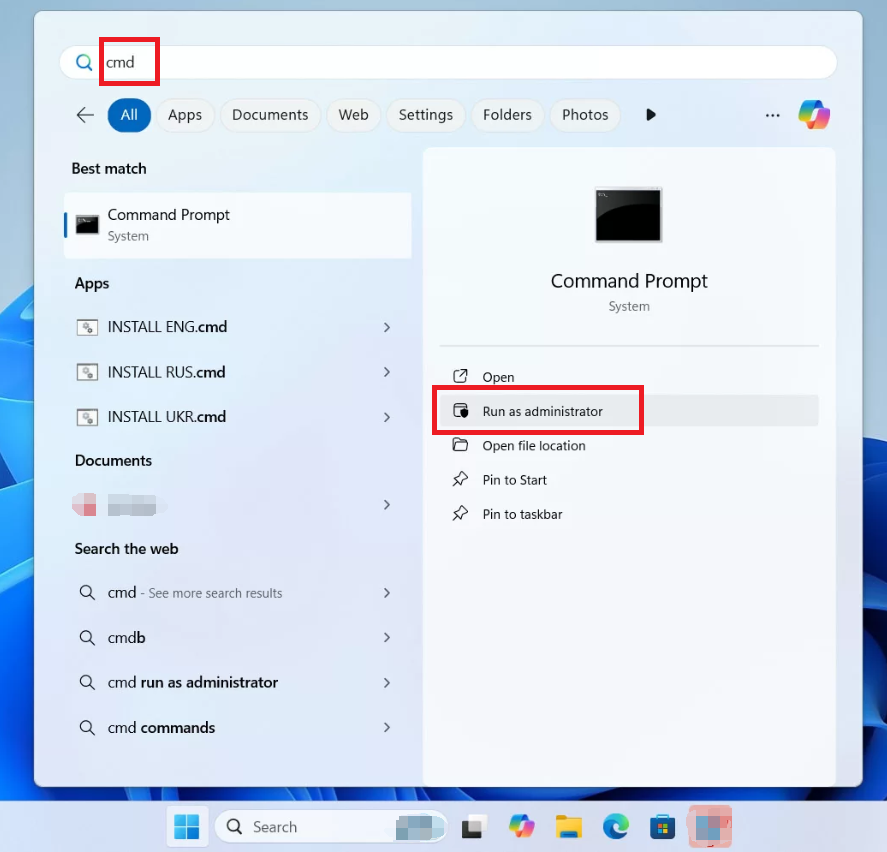
Check your current setup with these commands (run in Command Prompt):
Windows 11, run cmd as administrator

msinfo32

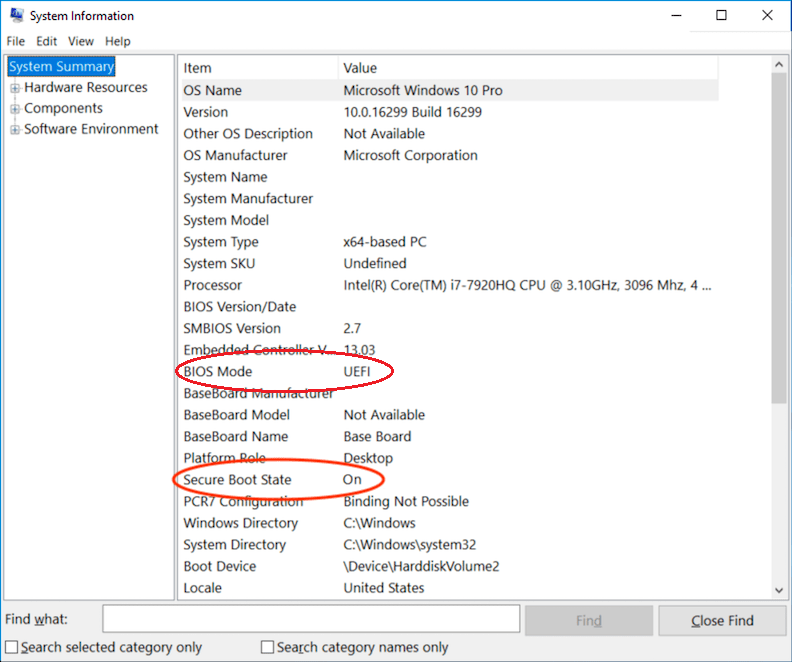
msinfo32 uefi and secure boot
Look under System Summary for BIOS Mode (should say UEFI) and Secure Boot State.

diskpart
list disk

This shows your disk styles—GPT is the one you want for new SSDs.

2. Pre-Clone Checklist

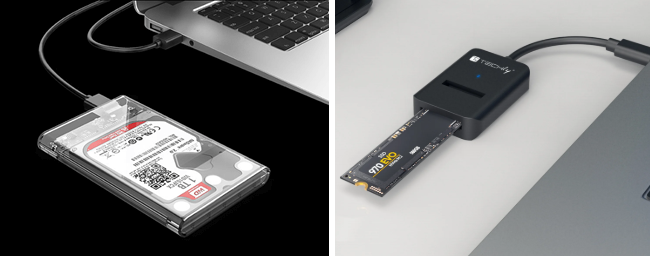
Before you do anything else, back up your critical data: documents, photos, browser bookmarks. Put them on an external drive or cloud storage. Then connect your new SSD properly—use a USB-to-M.2 adapter or enclosure for laptops, or install it internally if you have a desktop.
USB SSD enclosure for cloning
Make sure the new SSD has more capacity than the used space on your C drive. Total advertised size isn’t what matters; used space is. Temporarily disable BitLocker (via Settings > Update & Security > Device Encryption) and turn off any third-party antivirus.
Renee Becca includes a built-in backup feature as an extra safety net before cloning. Smart move.
Renee Becca – Safe and Quick System Migration to SSD

Automatic 4K alignment Improves SSD performance during system migration.

Support GPT and MBR Automatically adapt to the suitable partition format.

Support NTFS and FAT32 Redeploy various files in different file systems.

Back up quickly Back up files at up to 3,000MB/min.

Overall backup schedule Support system redeployment/system backup/partition backup/disk backup/disk clone.

Automatic 4K alignment Improve SSD performance

Support GPT and MBR Intelligently adapt to a partition format

Support NTFS and FAT32 Redeploy files in different file systems

Free TrialFree TrialNow 56337 people have downloaded!

Professional Cloning Solution: Why Renee Becca Is Recommended

If you want a reliable tool for cloning your C drive to a new SSD, Renee Becca is a solid choice. It handles full disk copies and targeted system migrations without making you jump through hoops.
Here’s what makes it work so well:
  • Full disk clone (Hard Disk Clone/Clone System Disk) and system-only migration (System Redeploy) both supported
  • Resize partitions just by dragging boundaries with your mouse
  • Built-in backup options so you don’t lose data if something goes wrong
  • Works with SATA, NVMe M.2, and external USB enclosures
Whether you’re doing a complete SSD replacement or setting up a dual-drive configuration(old drive for extra storage, new drive for OS), the software handles it. A free trial is available, though some advanced features require the full version.
Renee Becca – Safe and Quick System Migration to SSD

Automatic 4K alignment Improves SSD performance during system migration.

Support GPT and MBR Automatically adapt to the suitable partition format.

Support NTFS and FAT32 Redeploy various files in different file systems.

Back up quickly Back up files at up to 3,000MB/min.

Overall backup schedule Support system redeployment/system backup/partition backup/disk backup/disk clone.

Automatic 4K alignment Improve SSD performance

Support GPT and MBR Intelligently adapt to a partition format

Support NTFS and FAT32 Redeploy files in different file systems
Free TrialFree TrialNow 56337 people have downloaded!

Step-by-Step: Cloning C Drive to New SSD Using Renee Becca

Method 1: Full Disk Clone – Complete SSD Replacement

Step 1: Install and run Renee Becca.
download now
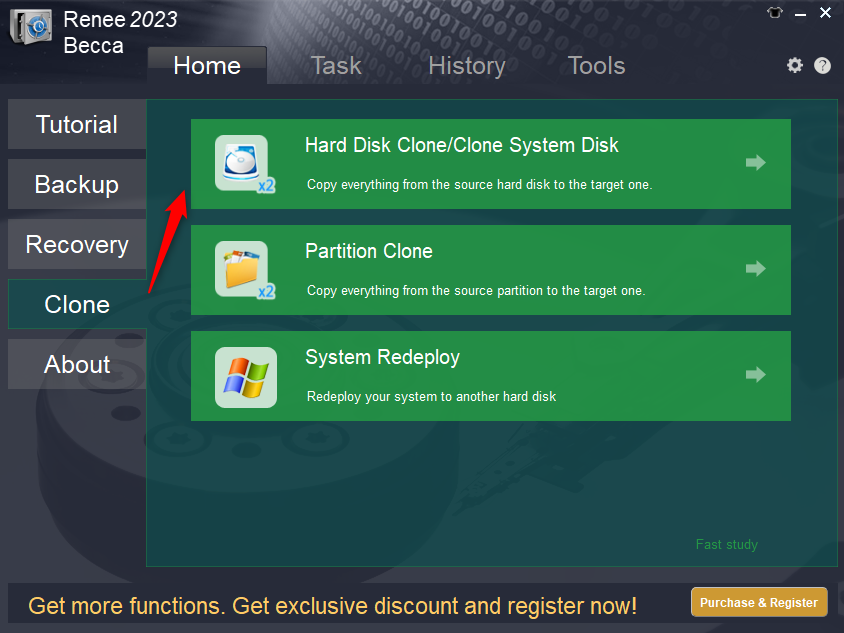
Step 2: Head to the Clone section and pick Hard Disk Clone/Clone System Disk.
renee becca disk clone
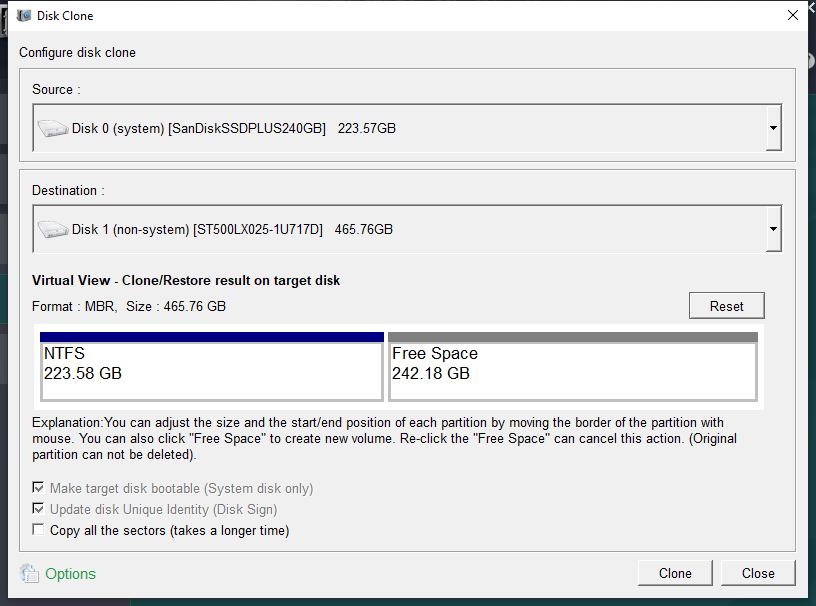
Step 3: Select your original drive (the one with C:, Also mark as (system) in Source list.) as the source and your new SSD as the destination.
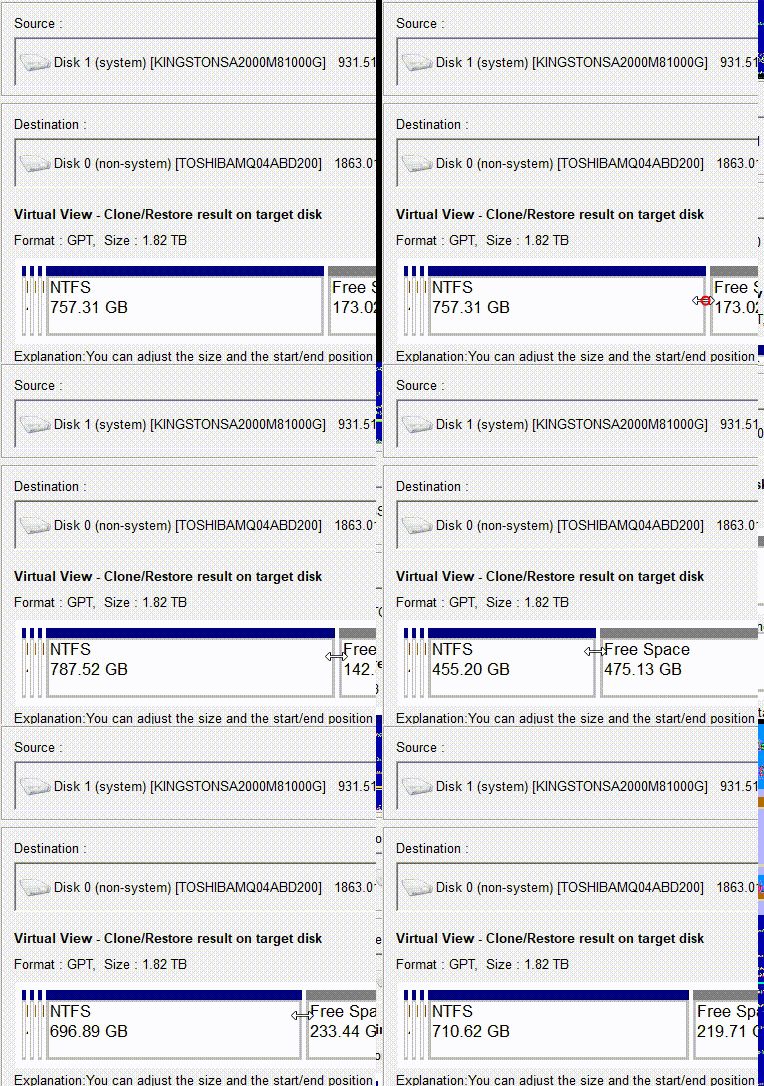
If the new SSD is larger, adjust partition sizes by dragging the boundaries with your mouse. For cases where licensed software stores data in reserved sectors, turn on the Copy all sectors option.

Some software may write license info in parition hidden sectors. In this case, you need to click Copy all sectors option to copy all license info.

clone the hard disk
Step 4: Click the Clone button and wait for the progress bar to hit 100%.
adjust partitions

Method 2: System Redeploy – OS-Only Migration

If your goal is just to move Windows to a new SSD, System Redeploy is the quickest and most space‑efficient method.
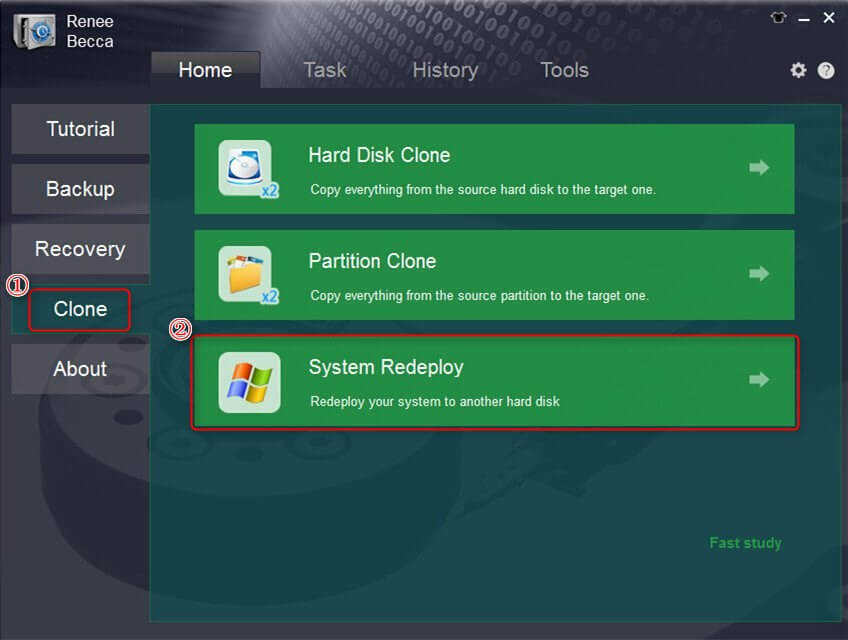
Use this approach when you want to keep your old drive for data storage. In the Clone section, choose System Redeploy.
select system redeploy function in clone
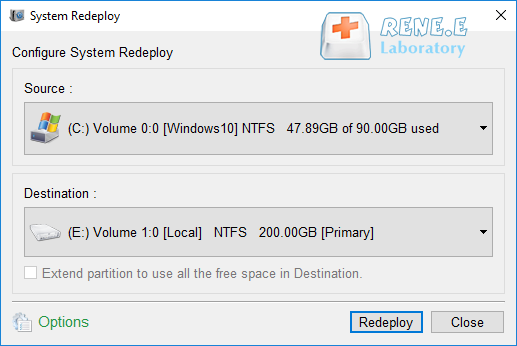
Select the new SSD as the target and your current system partition as the source. Click the Redeploy button to start moving just the operating system.
select a destination to redeploy system with renee becca

Post-Clone Actions

Shut down your computer once the cloning finishes. Disconnect the old drive if you’re replacing it, or change the boot order in BIOS so the new SSD boots first. Start up from the new drive and make sure everything works.

Important Note: The new drive’s total capacity must be larger than the size of the system you’re migrating. And remember—all data on the target disk will be erased during migration. Double-check that you’ve selected the correct drive before you start.

Troubleshooting: How to Handle “Cannot Boot from Cloned SSD”

1. Common Boot Failure Causes

When a cloned SSD won’t boot, it’s usually one of three things: incorrect BIOS boot priority, a UEFI/BIOS mode mismatch, or a missing EFI system partition on the cloned drive.
Modern Windows boot processes are picky about UEFI settings, Secure Boot, and proper partition alignment. Get any of those wrong and you’ll be staring at a black screen.

2. Step-by-Step Recovery Methods

Fix 1: BIOS configure

Restart and enter BIOS/UEFI (usually by pressing Del, F2, or F10). Set the new SSD as the first boot device, save changes, and reboot.

Fix 2: Using Windows commands

1. Insert your Windows installation USB or DVD.
If you don’t already have a Windows installation disc or bootable USB, you’ll need to create one using Microsoft’s Media Creation Tool on another working computer. You may download it from https://www.microsoft.com/software-download/windows10 or https://www.microsoft.com/software-download/windows11.
2. Restart your computer and press the boot menu key (typically F12, Esc, F9, or F10—check your PC manufacturer’s documentation) as soon as the screen lights up.
3. From the boot menu, select your USB drive or DVD drive as the temporary boot device.
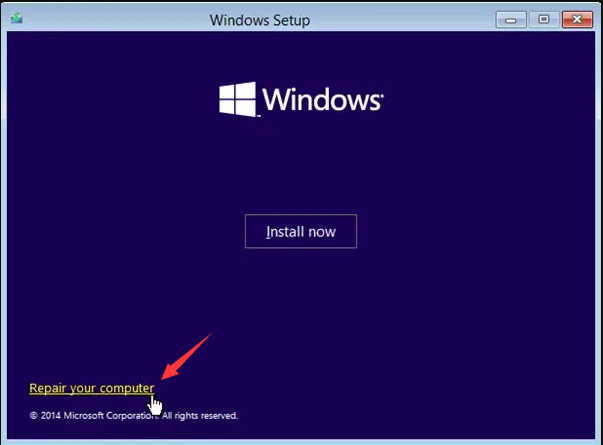
4. On the Windows Setup screen, click Next, then click Repair your computer (bottom-left corner).
windows installation repair your computer
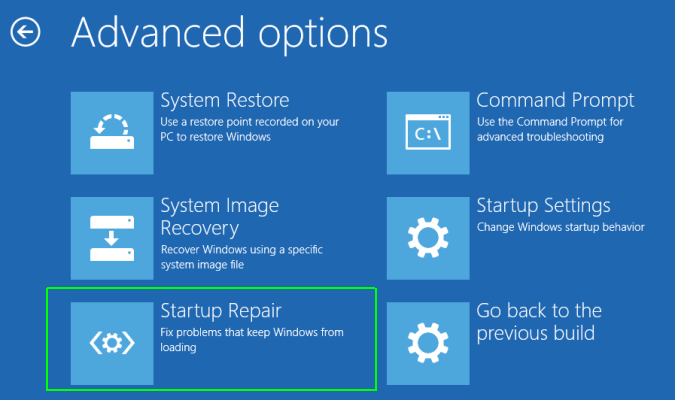
5. Go to Troubleshoot > Advanced Options > Startup Repair.
startup repair in Windows
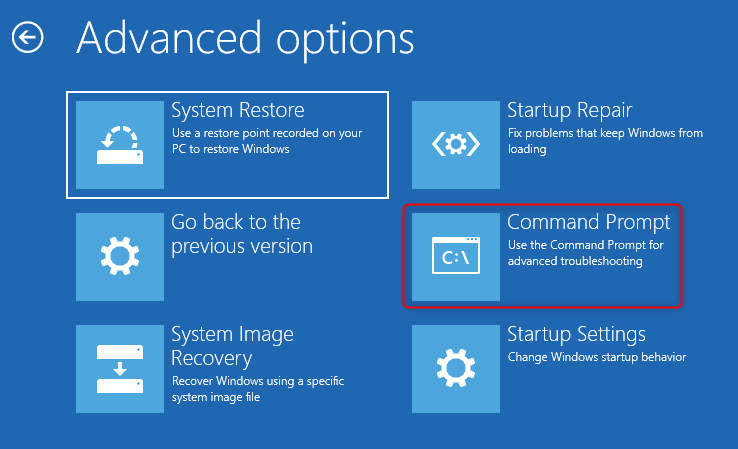
6. If Startup Repair fails, go back to Advanced Options and open Command Prompt.
command prompt
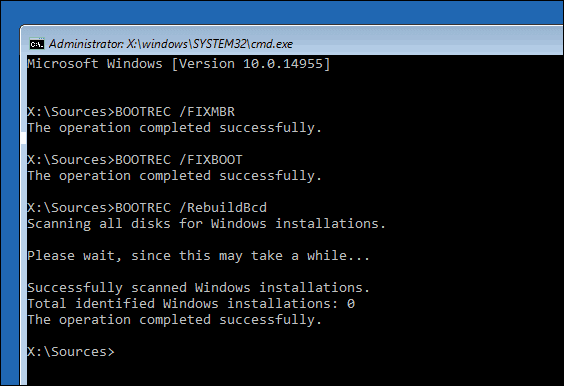
7. Run these Bootrec commands:

bootrec /fixmbr
bootrec /fixboot
bootrec /scanos
bootrec /rebuildbcd

Using bootrec /fixboot to fix Windows boot issues

Fix 3: Clone again

Re-clone using sector-by-sector mode in Renee Becca.

Fix 4: Switch SSD slot

For laptops with only one M.2 slot, connect the new SSD via a USB adapter first and test booting that way.

Post-Clone Optimization and Verification

Check your SSD’s health with CrystalDiskInfo—look at temperature, remaining life, and S.M.A.R.T. status.
Screenshot of CrystalDiskInfo displaying SSD health status
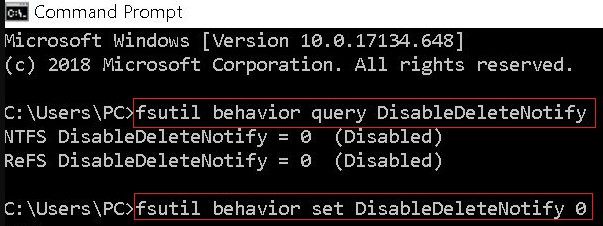
Then make sure TRIM is enabled:

fsutil behavior query DisableDeleteNotify

Command Prompt window showing output of fsutil behavior query DisableDeleteNotify, with result 0 indicating TRIM is enabled.
It should return 0. If the new SSD is larger than the old one, extend the partition using Disk Management.
MetricBefore CloningAfter Cloning

Boot Time

Slow

Fast

App Launch

Delayed

Quick

Free Space

Tight

Ample

Frequently Asked Questions (FAQ)

Can I clone to a smaller SSD than the original drive?

Yes, but only if the used space on your C drive is smaller than the new SSD’s capacity. Use Renee Becca’s System Redeploy feature or resize partitions carefully during cloning. And always back up first.

Do I need to reinstall Windows after cloning to SSD?

No. A proper clone with tools like Renee Becca transfers your entire working Windows installation, plus all your programs and settings.

Why does my cloned SSD show the same size as the old drive?

Windows doesn’t always extend partitions automatically. Open Disk Management, right-click the main partition, and extend it into the unallocated space.

Is Renee Becca free? What are the limitations of the trial?

Renee Becca offers a free trial for testing core functions like cloning. Some advanced or unlimited backup features require purchasing the full version.

How to clone C drive when my laptop has only one M.2 slot?

Use an external USB enclosure or adapter to connect the new SSD. Clone with Renee Becca, then physically swap the drives and adjust the BIOS boot order.
Renee Becca – Safe and Quick System Migration to SSD

Automatic 4K alignment Improves SSD performance during system migration.

Support GPT and MBR Automatically adapt to the suitable partition format.

Support NTFS and FAT32 Redeploy various files in different file systems.

Back up quickly Back up files at up to 3,000MB/min.

Overall backup schedule Support system redeployment/system backup/partition backup/disk backup/disk clone.

Automatic 4K alignment Improve SSD performance

Support GPT and MBR Intelligently adapt to a partition format

Support NTFS and FAT32 Redeploy files in different file systems
Free TrialFree TrialNow 56337 people have downloaded!

User Comments

Page 1

Leave a Comment


Your comment has been submitted and is awaiting moderation.