
author avatar
    Senior Product Manager
Last update by Emma Johnson at 11 July 2026

Summary
This guide examines the technical mechanisms behind chkdsk sd card data loss, specifically detailing how the repair utility relocates orphaned clusters into hidden FOUND.000 directories. Furthermore, it outlines systematic recovery methodologies, including deep scan protocols and manual file signature identification, to restore inaccessible documents and media.

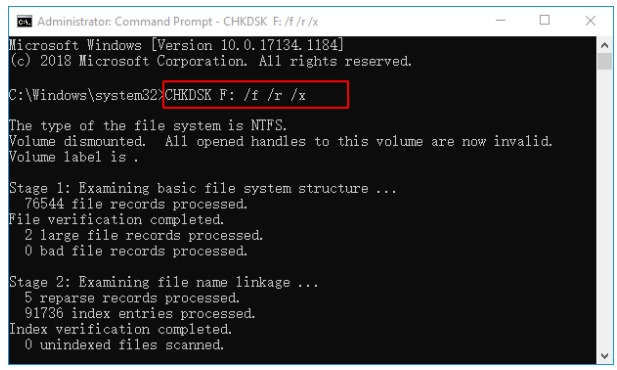
chkdsk F: /f /r /x
Picture this: you insert your SD card, Windows warns you of a problem, and you dutifully launch CHKDSK. The scan finishes, but when you open the card, your folders are empty. Where did your vacation photos or important work files go? This is often the moment users encounter chkdsk sd card data loss firsthand. The tool you hoped would save your files might have made them disappear. Understanding why this happens is crucial—whether you’re considering running CHKDSK, or you already have. This guide will clarify CHKDSK’s hidden risks and walk you through safe, effective steps to recover your files.

Stop all write operations to the SD card immediately. Do not save new files, do not format, and do not attempt further repairs—every write risks overwriting recoverable data.

What CHKDSK Actually Does to an SD Card

CHKDSK is a file system repair tool, not a data recovery solution. Its primary function is to scan the logical structure of a drive—checking the master file table (MFT), directory indexes, and allocation chains—and attempt to rebuild a consistent file system. While it can fix minor errors, CHKDSK doesn’t understand which files are important to you. Any data block not linked to a directory entry is treated as “orphaned,” even if it’s a complete, healthy file that simply lost its reference due to corruption.
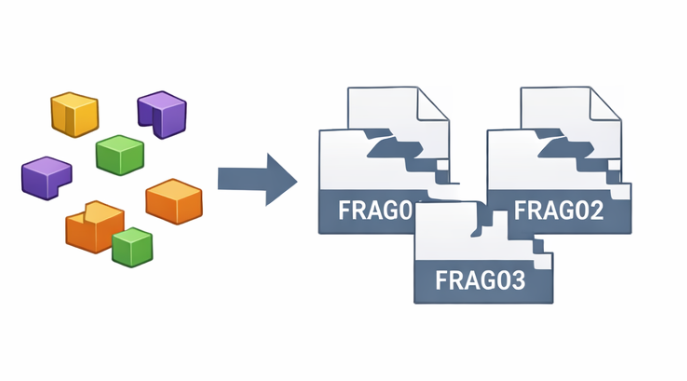
Here’s where data loss happens: when CHKDSK finds clusters marked as in-use but not associated with any folder, it breaks those up into fragments. These fragments are then saved in a hidden FOUND.000 folder (or FOUND.001, FOUND.002, etc. if run multiple times) as generically named files like FILE0001.CHK. All original folder names, filenames, and timestamps are lost. CHKDSK doesn’t intentionally delete your files, but the end result is that your data vanishes from view—making it feel like true loss. Recognizing this process is key to preventing chkdsk sd card data loss from becoming permanent.
orphan clusters save as file in CHKDSK

Saving those clusters as generic .CHK files can overwrite existing data blocks on the SD card, making some previously deleted files permanently unrecoverable.

Although CHKDSK’s behavior can seem mysterious or even destructive when files disappear, the gap between expectation and reality is often the real source of confusion. Understanding what the tool is designed to do—and what it cannot do—helps explain why its actions sometimes feel like data loss rather than repair. This contrast becomes even clearer when you compare common user assumptions with CHKDSK’s actual, technical behavior.
What users believe CHKDSK doesWhat CHKDSK actually does

Recovers missing photos, videos, and documents in their original folders.

Converts orphaned data clusters into raw .CHK fragments inside a hidden FOUND.000 folder.

Repairs the card and makes all files accessible.

Repairs the file system structure; files whose directory entries were lost are not “fixed” back to their original locations.

A safe “repair” button that cannot cause harm.

A write-intensive process that can overwrite recoverable data on a severely corrupted card.

Leaves all files untouched.

May split large files into multiple .CHK pieces, making them unusable without further recovery.

Sources: Microsoft Windows CHKDSK command-line reference and official FAT/NTFS specification documents.
Renee Undeleter - Powerful Data Recovery SoftwareRenee Undeleter data Recovery software

Easy to use Only simple steps to recover data from storage devices.

Multiple scan modes Fast partition scan, whole partition scan and whole disk scan for different recovery needs.

File types Support to recover pictures, videos, audios, documents, mails, etc.

Supported storage devices Recover data from recycle bin, SD card, external disk, etc.

Supported systems Windows 11,10, 8.1, 8, 7, Vista, XP, 2000 and Mac OS X10.6, 10.7, 10.8+.

Easy to use Only simple steps to recover data from storage devices.

Multiple scan modes - 3 scan modes for different recovery needs.

Supported storage devices Recover data from recycle bin, SD card, external disk, etc.
Free TrialFree TrialFree Trial

3000 users have downloaded Renee Undeleter and found data back!

When You Should Absolutely NOT Run CHKDSK

Certain scenarios turn CHKDSK from a helpful tool into a direct threat to your data. Knowing when to steer clear can save your files. The rule is simple: if you care about the files on the card and don’t have a verified backup, never run CHKDSK before securing your data. CHKDSK is meant to fix file systems, not rescue files from failing storage.

Signs That Running CHKDSK Will Worsen the Situation

Watch for these warning signs before running CHKDSK:
- The SD card appears as RAW in Disk Management—this means the file system is gone, and CHKDSK can’t safely operate.
- You hear unusual clicking or buzzing from the card reader—physical problems can’t be fixed by software and may worsen with use.
- The card isn’t recognized at all, or reports an incorrect capacity (e.g., a 32GB card showing as 2TB).
- Opening the drive triggers repeated “Drive not accessible” errors or a prompt to format.
- The card freezes during file transfers and Windows suggests scanning it—ignore this until you’ve made a full image backup.
Any of these symptoms mean the corruption is more severe than CHKDSK can handle, and running it could cause permanent chkdsk sd card data loss.

The RAW Drive Trap: Why CHKDSK Can’t Help and Often Hurts

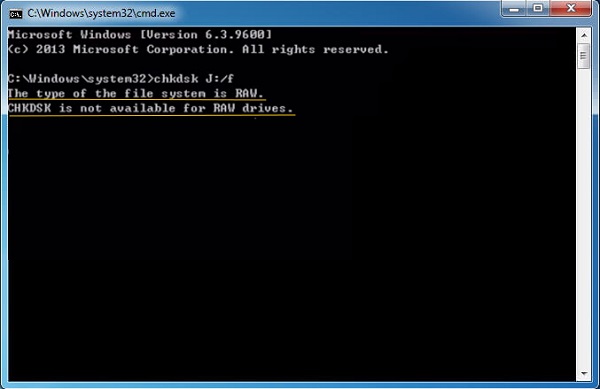
A RAW drive means no recognized file system—no FAT32, exFAT, or NTFS. CHKDSK depends on these structures to function. If Windows sees a RAW drive, it often prompts you to format. Running CHKDSK on a RAW volume usually fails with “CHKDSK is not available for RAW drives,” but sometimes Windows tries to initialize a new file system, overwriting the very data you want to recover. This is the worst-case scenario: a “helpful” repair that destroys your old file table for good.
CHKDSK is not available for RAW drives
Before you run CHKDSK, ask yourself:
Decision PointYes → Action)No → Action

Is the SD card RAW?

Do not run CHKDSK. Recover data first; format only after recovery.

Proceed to next question.

Do you have a full verified backup?

CHKDSK can be used if the card shows no physical failure.

Stop. Create a disk image and recover files before any repair.

Signs of physical damage?

Power off immediately; consult a professional.

CHKDSK may be considered only after data recovery is complete.

If you can’t answer “Yes” to the backup question, your safest next step is data recovery—not repair.

FAQ

Can CHKDSK recover deleted files from an SD card?

No. CHKDSK repairs file system structures like directory entries and allocation tables. It cannot “undelete” files that were erased, nor can it restore files whose folder links are lost—it simply moves orphaned data into .CHK fragments. For undeleting files, you need dedicated data recovery software.

Will running CHKDSK format my SD card?

Not directly. CHKDSK won’t format the card itself, but if your drive is RAW, Windows may prompt you to format before running CHKDSK. If you accept, the card will be formatted, erasing the old file system and potentially overwriting data. Even without formatting, CHKDSK’s repairs can overwrite recoverable structures, causing similar data loss.

How do I open .CHK files from the FOUND.000 folder?

.CHK files are raw binary dumps. There’s no standard program to open them. You can use a hex editor to identify the file’s signature and rename it with the correct extension (like .jpg), or use deep-scan recovery software to process .CHK files and extract usable data. Manual renaming works for unfragmented files; otherwise, recovery software is more reliable.
Renee Undeleter - Powerful Data Recovery SoftwareRenee Undeleter data Recovery software

Easy to use Only simple steps to recover data from storage devices.

Multiple scan modes Fast partition scan, whole partition scan and whole disk scan for different recovery needs.

File types Support to recover pictures, videos, audios, documents, mails, etc.

Supported storage devices Recover data from recycle bin, SD card, external disk, etc.

Supported systems Windows 11,10, 8.1, 8, 7, Vista, XP, 2000 and Mac OS X10.6, 10.7, 10.8+.

Easy to use Only simple steps to recover data from storage devices.

Multiple scan modes - 3 scan modes for different recovery needs.

Supported storage devices Recover data from recycle bin, SD card, external disk, etc.

Free TrialFree TrialFree Trial

3000 users have downloaded Renee Undeleter and found data back!

User Comments

Page 1

Leave a Comment


Your comment has been submitted and is awaiting moderation.