
author avatar
    Specialist of Customer Service Dept.
Last update by James Smith at 8 October 2026

Summary
This article outlines the diagnostic indicators that necessitate pen drive physical damage professional recovery over standard software solutions. It details the hardware failure symptoms, safe preliminary checks, and the specific conditions where specialized laboratory intervention becomes the only viable data retrieval method.

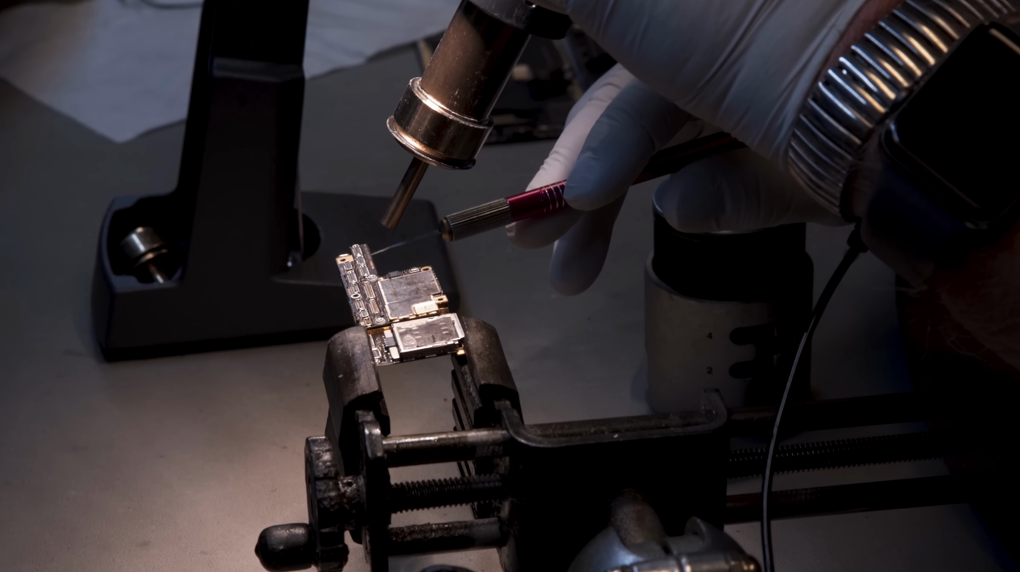

Pen drives can fail in two main ways. Logical data loss refers to situations where files are deleted, formatted, or lost due to file system corruption, but the hardware itself remains functional. Physical damage, on the other hand, means the USB connector, circuit board, NAND flash chip, or controller has sustained actual harm. In these cases, repeatedly scanning, replugging the drive, or trying common software fixes won’t help—because the problem lies in the hardware.
fix damaged cards in clean room
Physical damage is a common cause of pen drive failure. A drive can snap if a laptop is dropped, bend inside a bag, break under pressure, or suffer internal damage from water, coffee, or other liquids. In some cases, DIY repair attempts, such as improper soldering, can make the damage even worse.
It may be tempting to try different USB ports, recovery tools, or even open the device. However, these actions often worsen the problem. Professional recovery typically requires board-level repair or chip-off recovery, where specialists repair damaged components, replace broken connectors, or extract data directly from the NAND chip using specialized equipment. This process goes far beyond standard data recovery software.

Signs your USB flash drive has physical damage — and whether software recovery is still possible

Use the table below to determine if software-based recovery is still an option:
Sign What it means Recommended next step

Broken or bent connector

Power/data pins may not connect or could short

Stop plugging in; professional repair likely needed

Burnt smell or scorch marks

A component may have shorted or overheated

Remove immediately and consult a lab

Cracked housing

Internal PCB may be cracked or components dislodged

If detected, make a backup image; if not, seek a lab

No LED activity

Drive isn’t receiving power or controller is dead

Try once on another port/PC, then stop

Not detected on any PC

Controller isn’t enumerating—likely PCB/NAND damage

Software recovery not possible; lab required

Detected but zero capacity

Controller sees the device, but NAND isn’t fully accessible

Try software recovery, but drive is unstable

If the drive never appears in Disk Management on any PC, no software scan can communicate with the storage chip.

When a USB flash drive is missing from Disk Management, Windows cannot even attempt to interact with it. This points to a hardware-level failure, not just a formatting issue.

What to do first: safe checks before attempting any recovery

Before doing anything else, take these precautions to protect your data:

1. Avoid repeatedly plugging and unplugging the drive.

2. Never force a bent USB connector into a port.
3. Do not open the pen drive’s housing.
4. Don’t attempt soldering or board repairs unless professionally trained.

5. Test only once on another known-good PC or direct USB port.

6. Record your observations: detection status, reported capacity, any heat, smells, or looseness.
Repeated power cycles can turn a recoverable issue into permanent data loss, leaving professional pen drive physical damage recovery as your only option. A single extra insertion can cause a short or make a cracked trace fail completely.

If the drive is still detected, use Renee Undeleter to recover files

If your pen drive still shows up in Windows as a selectable disk, you have a narrow window to retrieve your files. Renee Undeleter is professional data recovery software for Windows PCs, memory cards, and external storage devices. It supports NTFS, FAT, FAT32, exFAT, macOS, and Linux file systems.
Hot Topic Recover Lost Files from a Pen Drive with Bad Sectors

Strong to recover Recover data from the storage devices sustaining many bad sectors.

Supported devices SD card, SDHC, SDXC, USB flash drive, hard disk, computer, etc.

Supported file types Image, video, audio, text, email, etc.

Easy to use Recover by 3 steps and support to preview scan results.

Multiple scan modes Fast partition/whole partition/whole disk scan.

Easy to use Recover by 3 steps.

Multiple scan modes Fast partition/whole partition/whole disk scan.

Supported devices SD card/USB/hard disk, etc.

Free TrialFree TrialFree Trial 800 people have downloaded!
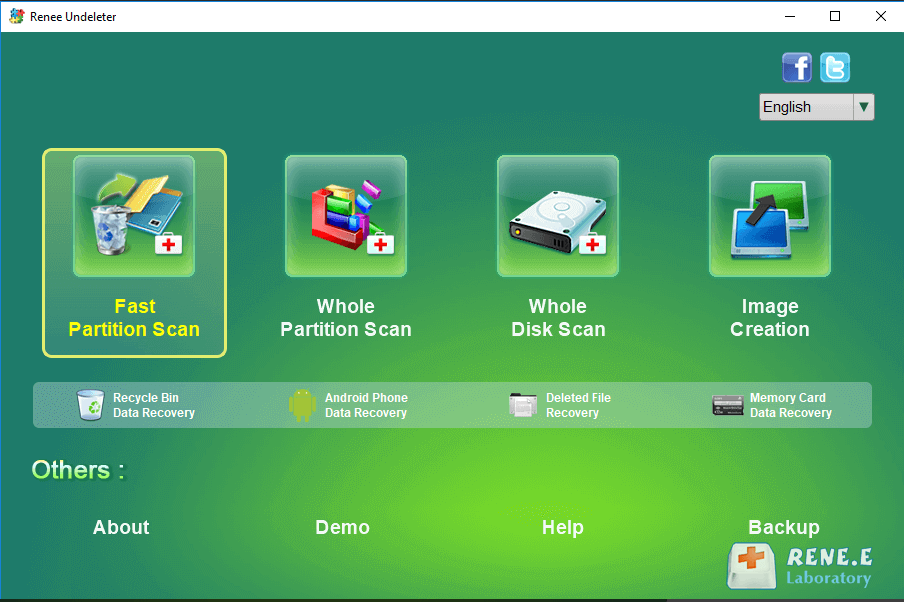
Key features include:
- Fast Partition Scan for recently deleted files.
- Whole Partition Scan for formatted or corrupted partitions.
- Whole Disk Scan for severe logical damage or a damaged partition structure.
- Image Creation to make a byte-for-byte backup of a failing drive before scanning.
- File Preview so you can confirm files before recovery.
Renee Undeleter, select Fast Partition Scan
Be sure to install Renee Undeleter on a healthy drive—not the damaged pen drive itself. USB recovery is typically slower than scanning an internal drive, and the Image Creation feature requires enough free space on a separate healthy disk.

Software recovery cannot repair a snapped connector, burnt controller, or failed NAND chip.

If the drive disconnects, becomes hot, smells burnt, or Windows reports it as unknown, stop immediately. These are signs of hardware failure. At that point, further software attempts will not help—you need pen drive physical damage professional recovery at a specialized lab.

FAQ

What should I do if my USB flash drive is not detected on any computer?

Do one final check on a different known-good PC with a direct USB port. If Disk Management still does not show the drive, stop testing. The issue is likely with the controller, PCB, or NAND chip. Continuing to plug in the drive can cause shorts and reduce the odds of successful professional recovery.

Is it safe to keep plugging in a physically damaged pen drive to test it?

No. Repeated insertions can worsen connector damage, cause short circuits, and overheat failing components. After a physical incident, perform one visual inspection and one detection check on a known-good system. If the drive is not detected or behaves abnormally, stop and consult a professional lab.
Renee Undeleter - Powerful Data Recovery SoftwareRenee Undeleter data Recovery software

Easy to use Only simple steps to recover data from storage devices.

Multiple scan modes Fast partition scan, whole partition scan and whole disk scan for different recovery needs.

File types Support to recover pictures, videos, audios, documents, mails, etc.

Supported storage devices Recover data from recycle bin, SD card, external disk, etc.

Supported systems Windows 11,10, 8.1, 8, 7, Vista, XP, 2000 and Mac OS X10.6, 10.7, 10.8+.

Easy to use Only simple steps to recover data from storage devices.

Multiple scan modes - 3 scan modes for different recovery needs.

Supported storage devices Recover data from recycle bin, SD card, external disk, etc.

Free TrialFree TrialFree Trial

3000 users have downloaded Renee Undeleter and found data back!

User Comments

Page 1

Leave a Comment


Your comment has been submitted and is awaiting moderation.