author avatar
    Specialist of Customer Service Dept.
Last update by James Smith at 22 February 2026

Summary
This article explains how to recover data from hard drive that wont boot by identifying common logical, firmware, and system-level causes. It outlines non-destructive recovery approaches such as bootable USB environments, Linux live systems, and external drive connections. Professional recovery scenarios are also categorized based on risk and failure type.



A computer that refuses to boot can feel like a minor disaster, but in the vast majority of cases your personal files, photos, documents, and videos remain completely intact on the hard drive or SSD. The operating system simply cannot load, while the storage itself is still readable.
hard drive wont boot data recovery
To make diagnosis fast and clear, here is a summary of the most common logical, firmware, and OS-level reasons why a drive will not boot — along with the most suitable recovery methods for each:
Cause Common Symptoms Data Recovery Likelihood Suitable Methods (Non-Destructive)

Corrupted boot sector

“No bootable device”, black screen, boot loop

95%+

Renee PassNow Bootable USB or Linux Rescue Kits

Damaged MBR / GPT partition table

“Invalid partition table”, boot manager error

90–95%

Bootable USB (PassNow Data Transfer) or Linux Live

Failed Windows update

Blue screen (BSOD) right after update

85–95%

Renee PassNow Bootable USB (Data Transfer)

Bad / corrupted system files

Automatic Repair loop, error codes 0xc00000e9 etc.

90%+

Linux Rescue Kits or PassNow Undeleter

Motherboard / power-supply glitch (drive electronics fine)

Drive not spinning temporarily but visible in BIOS

98%

External connection (if USB boot fails)

The real danger signs are mechanical: loud clicking or grinding noises, a burning smell, or the drive not appearing at all in the BIOS/UEFI screen. If none of these are present, your data is almost certainly recoverable using safe, read-only methods. Every solution in this guide is designed to never write anything to the affected drive, preserving your files exactly as they are. Best of all, most steps require no tools or disassembly, so even complete beginners can get started right away.
strange disk clicking noise
Act quickly but calmly. The sooner you stop powering the failing drive on and off unnecessarily, the higher your chances of a full recovery.

Method 1: Create a Bootable USB Rescue Drive to Access and Copy Files

When your PC won’t boot, the quickest and lowest-risk way to reach your files is to boot from a special USB rescue drive instead of the internal hard drive. This approach keeps the original drive untouched and lets you browse and copy everything to an external USB or network location in minutes.
Renee PassNow is a versatile Windows recovery and system rescue tool that creates a bootable USB and lets you access or recover data even when Windows or macOS will not start at all. It includes a powerful built-in Undeleter module for deep scanning and file recovery, plus a one-click Data Transfer feature — all in the same bootable environment.
Renee Passnow – Professional Windows Password Remover

Remove Windows Login Password 3 steps for whole password remove process.

Recover the files Recover the deleted files without Windows system.

Transfer the data Transfer the important files of the computer with system.

Multifuctional Data transfer, data recovery, bootable problem recovery can be run without system.

Highly compatible Windows 11/10/8.1/8/7/XP/Vista. UEFI boot.

Remove Login Password Support Windows 11/10/8.1/8/7/XP/Vista. UEFI boot.

Recover the files Recover the deleted files without Windows system.

Transfer the data Transfer the important files of the computer with system.

Free TrialFree TrialNow 2000 people have downloaded!
Advantages:
  • One-click bootable USB creation
  • Built-in Undeleter for deep recovery without OS
  • Dedicated Data Transfer wizard
  • File preview before saving
  • Works on Windows 11/10/8/7/XP
  • No disassembly required

Disadvantages:

  • Paid software (free trial available)
  • Requires a second working PC to create the USB

Step-by-step guide
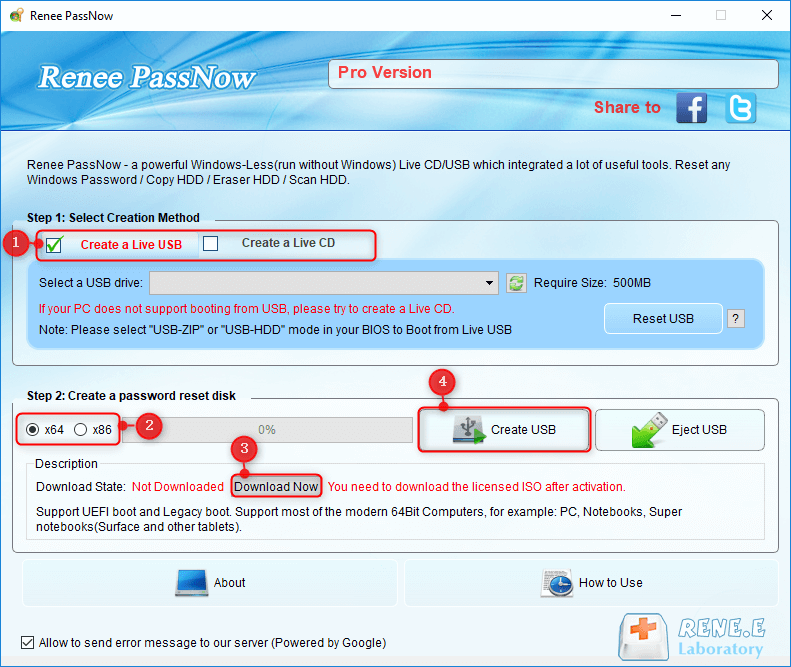
1. On a working computer, download and install Renee PassNow from the official site.
Insert a blank USB drive (at least 8 GB) and launch the program.
2. Choose the correct architecture (x64 recommended for modern PCs), download the ISO. Select “Create a Live USB” and follow the prompts. Back up anything important on the USB first—it will be erased.
use renee passnow to create usb to reset passnword
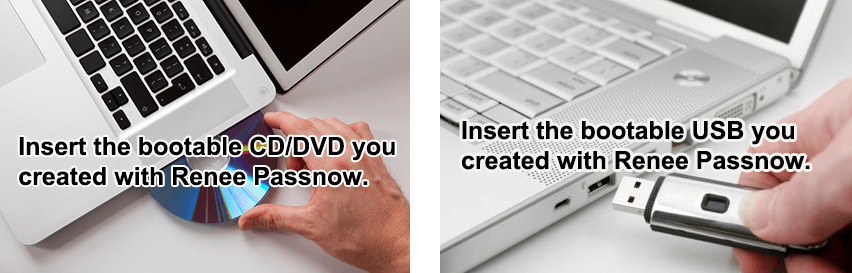
3. Insert the USB into the non-booting computer, power on, and immediately tap the BIOS key (shown briefly on screen) to enter setup. Set the USB as the first boot device, save, and exit.
insert theboot cd or usb stick
Common BIOS boot menu keys
Server Type Enter boot menu method

DELL

Press the F12 key repeatedly before the Dell logo appears on the screen.

HP

Press the F9 key multiple times when the HP logo is displayed.

Common Computers
BIOS Name Enter boot menu method

ASRock

DEL or F2

ASUS

DEL or F2 for PCs/ DEL or F2 for Motherboards

Acer

DEL or F2

Dell

F12 or F2

ECS

DEL

Gigabyte / Aorus

DEL or F2

Lenovo (Consumer Laptops)

F2 or Fn + F2

Lenovo (Desktops)

F1

Lenovo (ThinkPads)

Enter then F1

MSI

DEL

Microsoft Surface Tablets

Press and hold Power and Volume Up buttons

Origin PC

F2

Samsung

F2

Toshiba

F2

Zotac

DEL

HP

Esc/ F9 for Boot Menu/ Esc/ F10/ Storage tab/ Boot Order/ Legacy Boot Sources

INTEL

F10

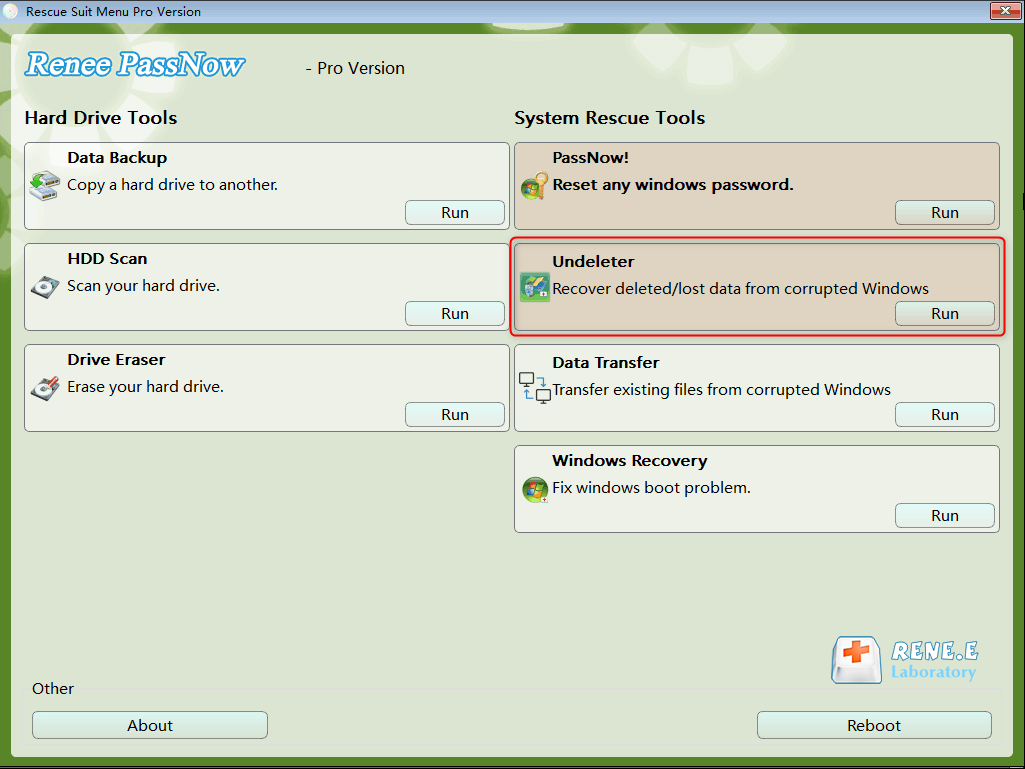
4. After Renee PassNow loads, choose the best option for your needs:
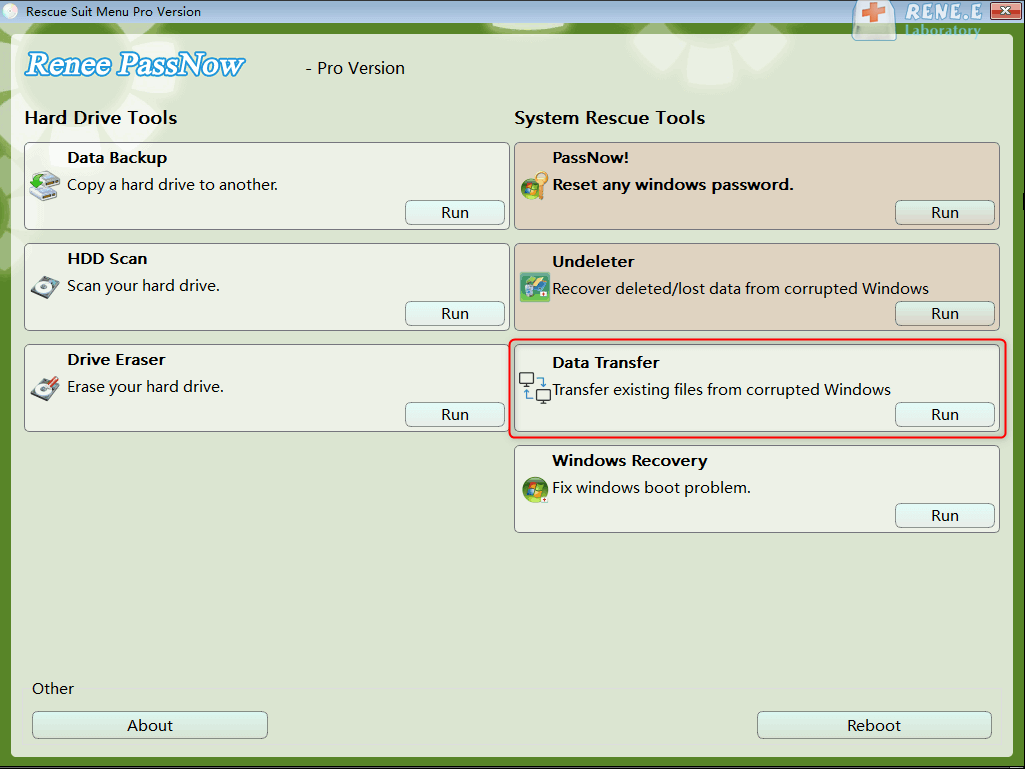
Quick file copy with Data Transfer
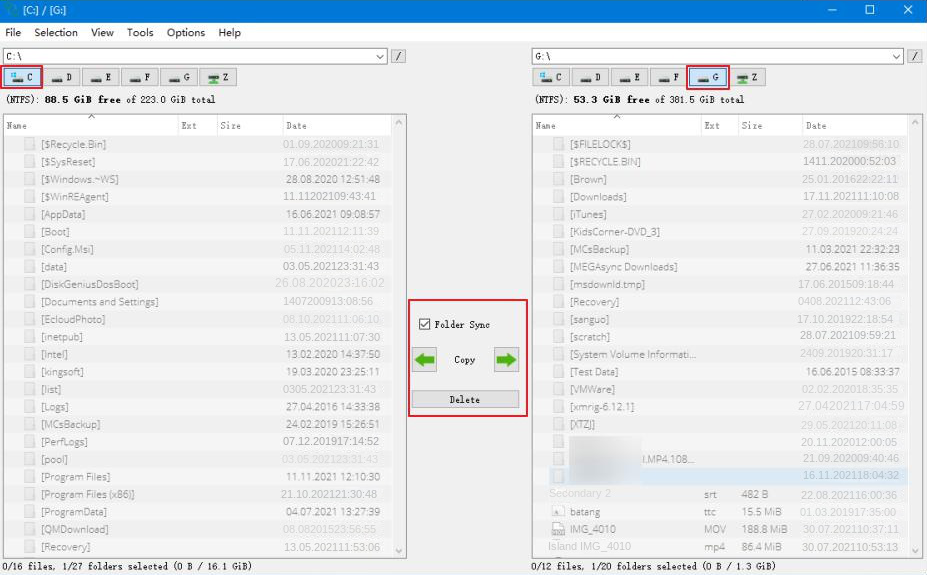
Select the Data Transfer function. Choose your internal drive on the left, an external USB drive on the right, select the folders you need (Documents, Pictures, Desktop, etc.), and click Copy.
data transfer function in Renee PassNow
transfer data interface
Recover lost file with built-in Undeleter
If you need to recover deleted/lost files or scan deeper, select the “Undeleter” option on the main interface and click Run.
data recovery function in Renee PassNow
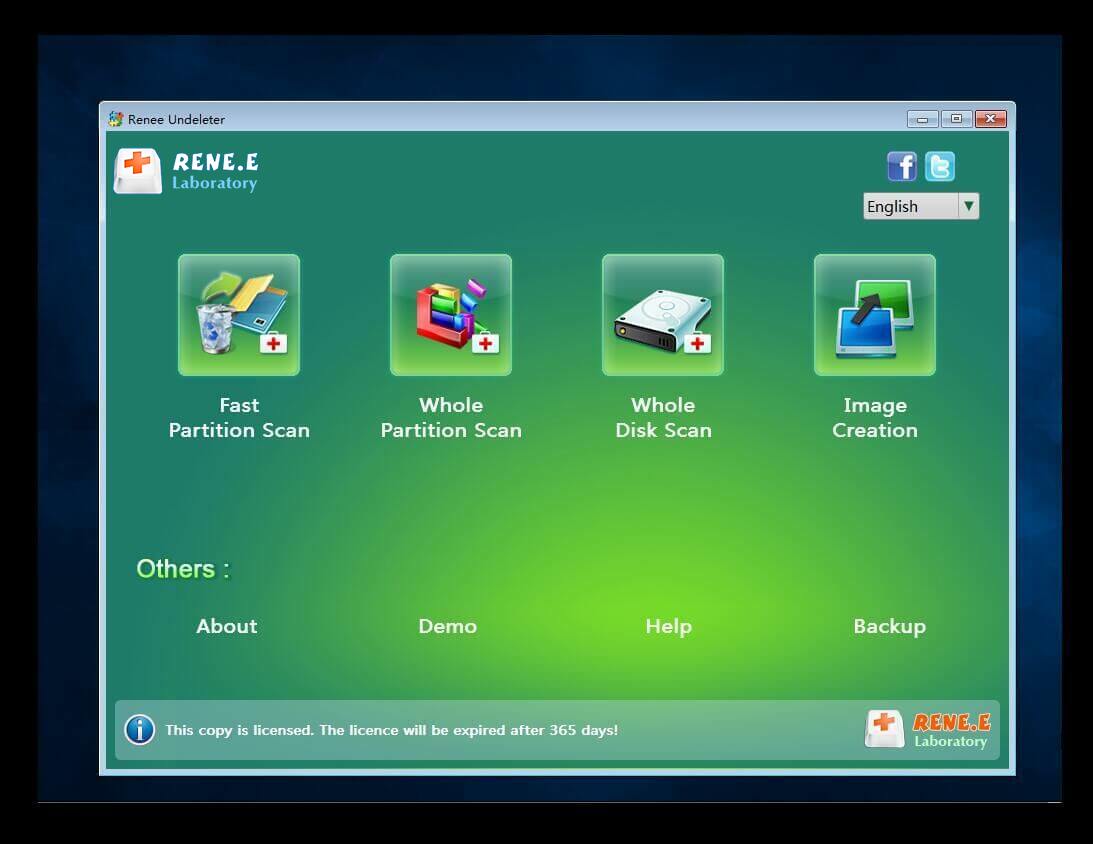
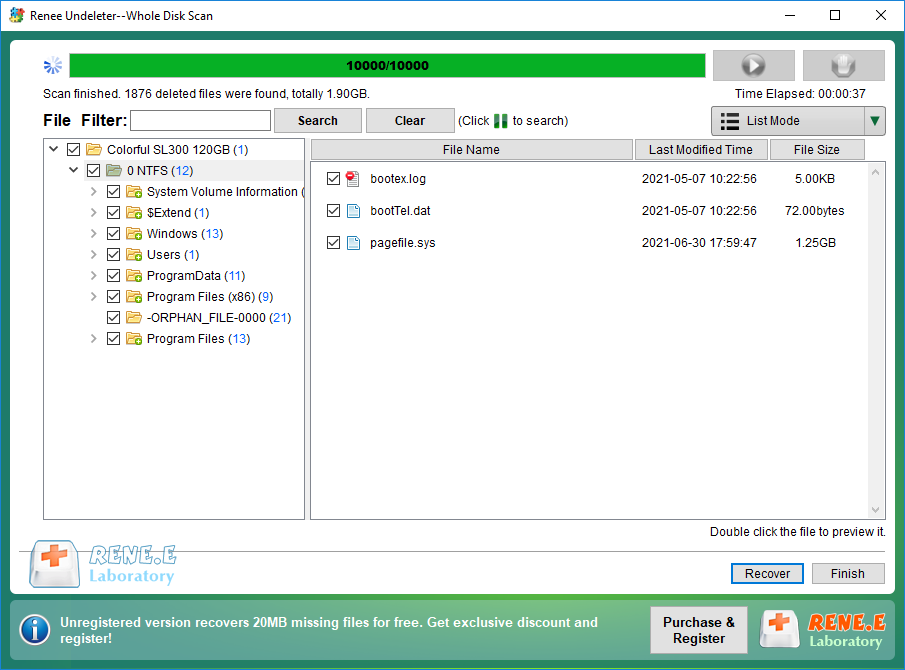
Select Whole Disk Scan (recommended for non-booting or RAW drives).
scan the whole partition with renee passnow recovery function to reinstall windows 7
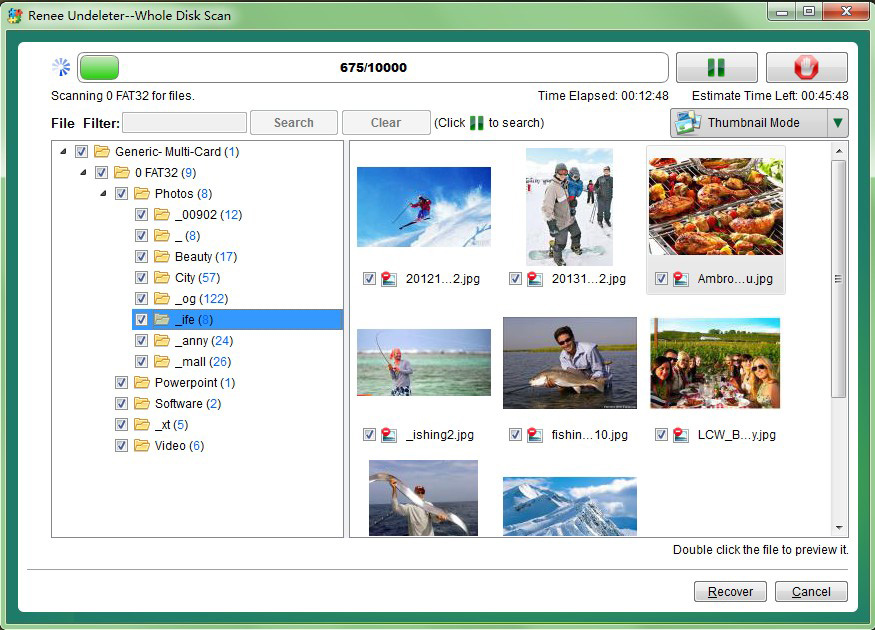
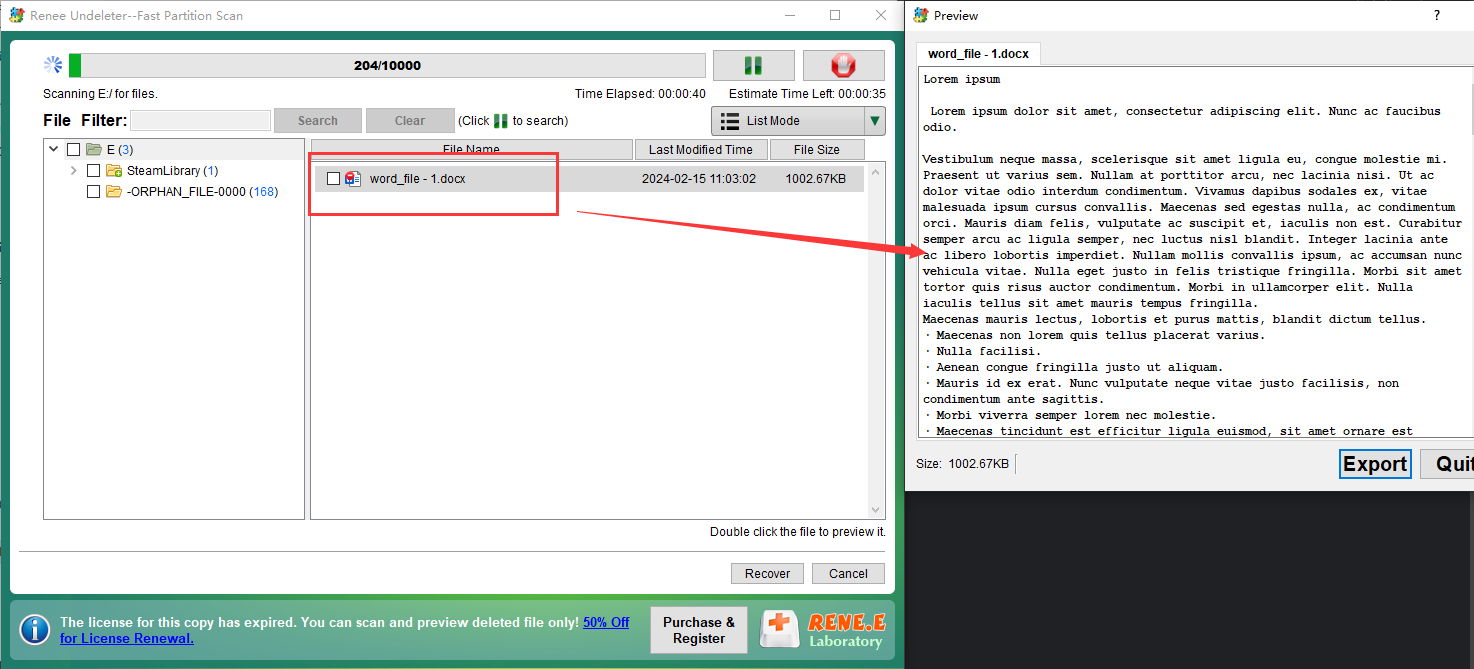
After the scan completes, preview the recoverable files, select what you need, and click Recover — always save to an external drive.
preview before recovery

Troubleshooting

USB not booting: Double-check BIOS boot order and disable Secure Boot if needed.
Internal drive not appearing: Wait 30–60 seconds or try a different USB port.
Very slow transfer: Use a USB 3.0+ port and external drive.
Critical warning: Never save recovered files back to the same internal drive. Always use an external USB, another internal drive, or cloud storage.

Method 2: Use Free Linux Rescue Kits

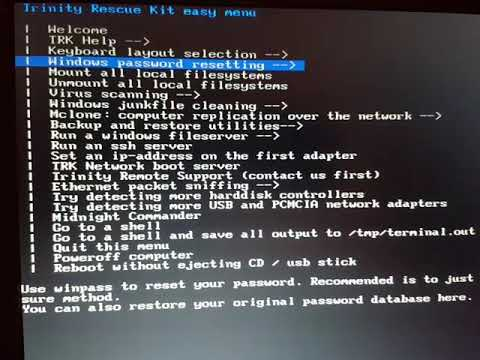
For users who prefer a completely free solution — or are on a budget — specialized Linux rescue kits are the most popular choice among technicians and home users worldwide. These lightweight bootable environments provide powerful tools for mounting drives, repairing partitions, and copying data without touching the failing drive.
Trinity Rescue Kit

Popular Linux Rescue Kits Comparison

Rescue Kit ISO Size Ease for Beginners Key Recovery Tools Best For

SystemRescue

~800 MB

Medium-High

TestDisk, PhotoRec, ddrescue, GParted

Advanced data rescue & cloning

Trinity Rescue Kit (TRK)

~300 MB

Medium

NTFS tools, file undelete scripts

Quick Windows data rescue

GParted Live

~400 MB

Beginner-Friendly

GParted, fsck, ntfs-3g

Partition check & safe file copy

Step-by-step

1. Download the ISO from the official sites (system-rescue.org, trinityhome.org, gparted.org).
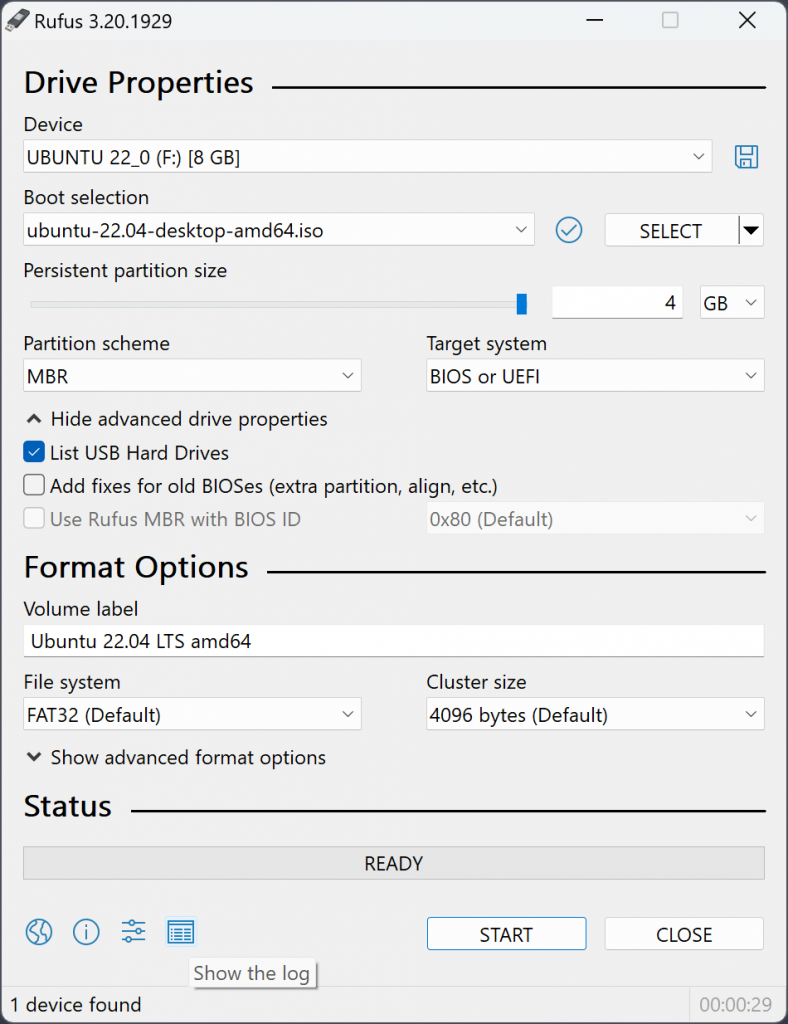
2. Create the bootable USB with , balenaEtcher, or Ventoy.
refus
3. Boot from the USB and select the live mode (e.g., “Start SystemRescue” or default GParted).
4. Carefully mount the internal drive read-only and copy important folders to an external USB, or use built-in tools like TestDisk/PhotoRec for deeper recovery.
5. Safely eject everything and shut down.

Quick File System Troubleshooting in Live Linux

  • Drive shows as read-only: Right-click → Properties → ensure NTFS is mounted with ntfs-3g.
  • RAW or unallocated partition: Use Disks utility or GParted to check (never format).
  • Permission issues: Open terminal and use sudo cautiously or right-click → Open as Administrator.
Advantages:
  • Completely free with no usage limits
  • Full open-source transparency and offline operation
  • Lightweight options available for older PCs

Disadvantages:

  • Requires occasional command-line knowledge for tricky mounts
  • Interface may feel less polished than paid one-click wizards
Remember: never install any software or save files to the internal drive while in the Live session.

Method 3: Remove the Hard Drive and Connect It Externally to Another Computer

This section targets users comfortable with basic hardware handling whose drive is not accessible via bootable USB/live OS (e.g., not detected in BIOS, severe boot corruption, or full system failure). It is a reliable next-step escalation when non-disassembly methods fail, but it carries slightly higher risk due to physical handling.
1. Safety Precautions & Preparation
Power off and unplug everything. Touch a grounded metal surface or wear an anti-static wrist strap. Work on a non-carpeted surface. For laptops, disassembly may void warranty—check your manufacturer’s policy and consider professional help if unsure. Desktops are usually simple (remove side panel); laptops require model-specific guides (search iFixit for your exact model).
If you are unfamiliar with how to remove disks from your computer or laptop, you can refer to the following article:
2. Choosing the Right Adapter or Enclosure
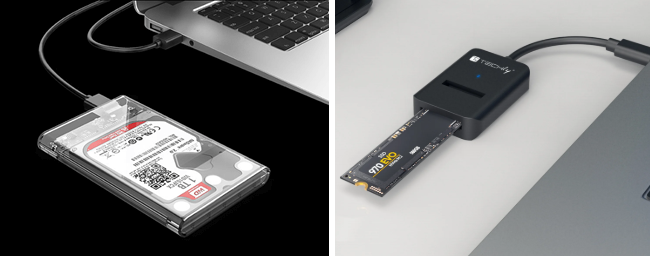
Most laptop drives are 2.5″ SATA; older desktops use 3.5″ SATA. M.2 SSDs need a compatible SATA or NVMe adapter (NVMe performs best on USB 3.1+). Look for adapters using JMicron or ASMedia chipsets for broad compatibility. 3.5″ drives usually need a powered enclosure.
usb ssd / disk enclosure
3. Physical Removal & External Connection
Photograph the cables before unplugging. Gently remove the drive, insert it into the adapter/enclosure, and connect to a healthy Windows computer via USB.
4. Accessing the Drive & Using Renee Undeleter for Recovery
Renee Undeleter is a dedicated Windows data recovery program that restores files from deleted, formatted, or inaccessible drives with Fast Partition Scan, Whole Partition Scan, and Whole Disk Scan modes. It previews photos and documents and supports hundreds of file types.
Renee Undeleter - Powerful Data Recovery SoftwareRenee Undeleter data Recovery software

Easy to use Only simple steps to recover data from storage devices.

Multiple scan modes Fast partition scan, whole partition scan and whole disk scan for different recovery needs.

File types Support to recover pictures, videos, audios, documents, mails, etc.

Supported storage devices Recover data from recycle bin, SD card, external disk, etc.

Supported systems Windows 11,10, 8.1, 8, 7, Vista, XP, 2000 and Mac OS X10.6, 10.7, 10.8+.

Easy to use Only simple steps to recover data from storage devices.

Multiple scan modes - 3 scan modes for different recovery needs.

Supported storage devices Recover data from recycle bin, SD card, external disk, etc.

Free TrialFree TrialFree Trial

3000 users have downloaded Renee Undeleter and found data back!

Advantages:
  • Multiple targeted scan modes
  • Built-in file preview
  • Supports RAW and unallocated drives
  • Simple step-by-step wizard

Disadvantages:

  • Requires a working PC for installation
  • Free version has recovery limits
  • Not suitable for severe physical damage

Recovery steps

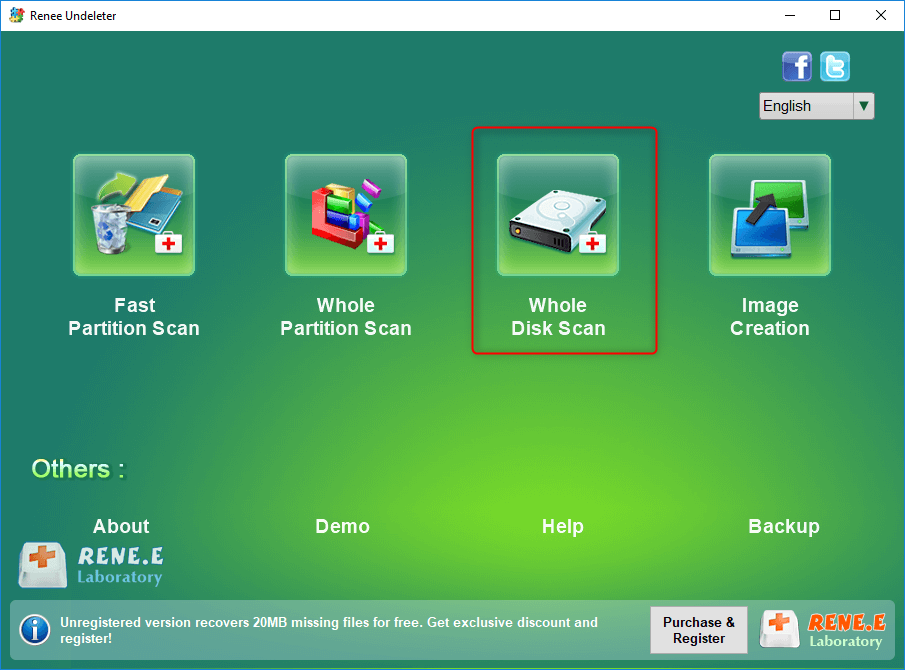
1. Download and Launch Renee Undeleter and select Whole Disk Scan (ideal for non-booting or RAW drives).
download Windows
download macos
select whole disk scan in renee undeleter
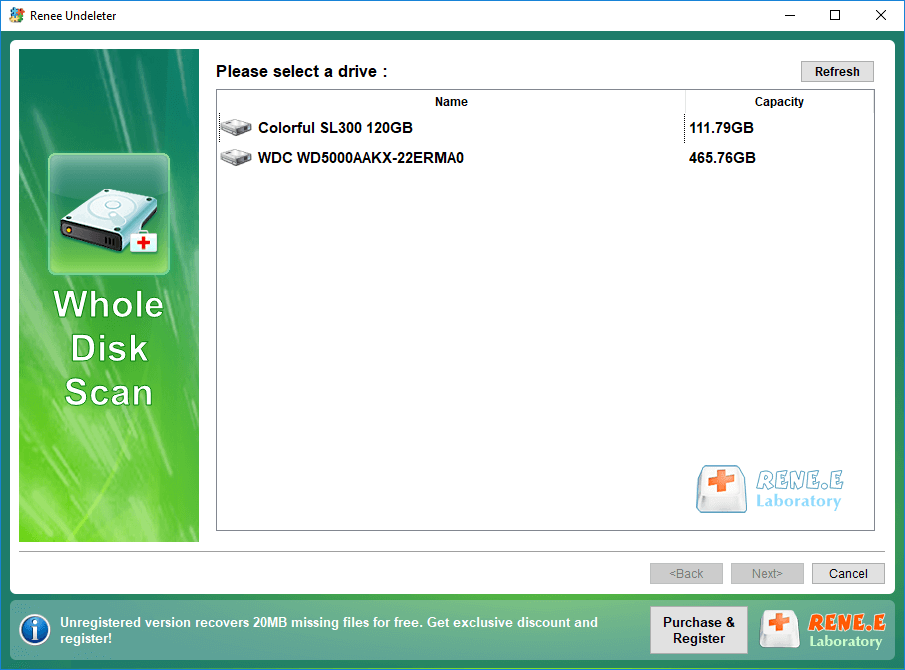
3. Choose the externally connected drive (confirm by capacity).
select a disk to recover in renee undeleter
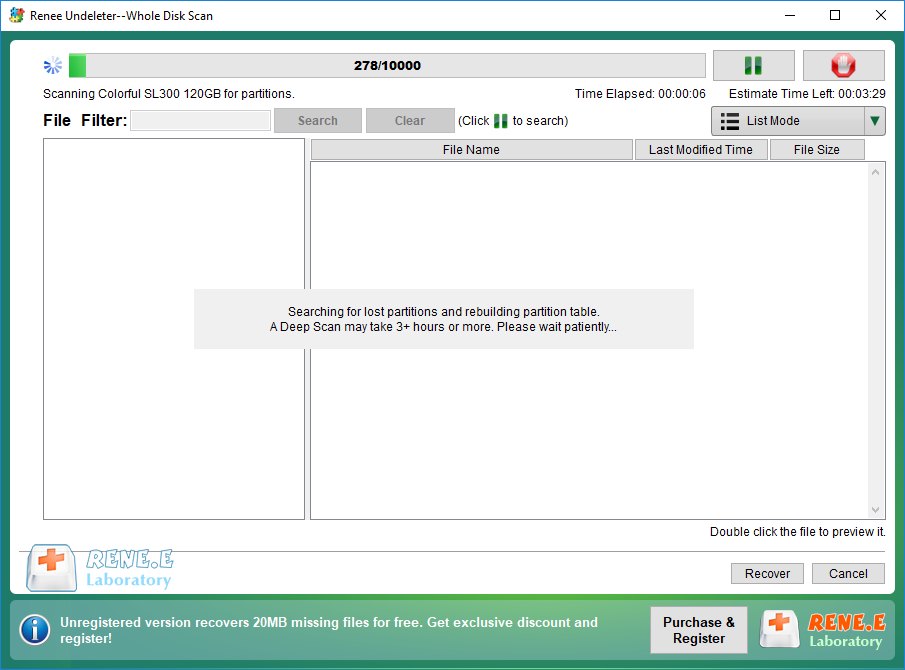
4. Let it scan (time varies; pause if needed).
scanning the whole disk in renee undeleter
5. Preview recoverable files.
select taget files to recover with renee undeleter
6. Select what you need and click Recover—save everything to a different drive.
undeleter preview docx
Critical: Always save recovered files to a separate storage device. Writing to the source drive risks permanent data loss.

Troubleshooting Common Issues
  • Shows as RAW/unallocated: Do NOT initialize or format.
  • Not detected: Try different cable/port/adapter.
  • Scan freezes or drive makes noise: Stop immediately and seek professional help.
SSDs have no moving parts and are quieter, but TRIM can make deleted data harder to recover—act fast and avoid writes. HDDs are more prone to mechanical failure after removal.
If hardware steps feel intimidating, skip to the professional service section below.

When to Stop DIY Attempts and Contact a Professional Data Recovery Service

Certain symptoms mean DIY methods can cause more harm than good. Stop immediately if you encounter any of the following:

Red-Flag Symptoms Table

Symptom Severity Level (Risk) DIY Risk Action Required

Clicking, grinding, beeping

High (70–90%)

Very High

Stop immediately

Burning smell or visible damage

Critical (90%+)

Extreme

Power off, contact lab

Drive not detected in BIOS (even external)

High (60–80%)

High

Professional cleanroom evaluation

Extremely slow / freezing during scan

Medium-High (50–75%)

High

Stop scan, seek pro imaging

Rapidly increasing bad sectors (CrystalDiskInfo)

High (65–85%)

High

Professional service

Physical damage requires a Class-100 cleanroom, specialized platter extraction tools, or NAND chip-off reading — none of which are possible at home.

Professional Data Recovery Pricing Guide (2026)

In the United States, costs vary by failure type, drive size, and urgency. Most reputable labs offer free evaluation and “no data, no fee” policies. Current average ranges from major providers:
Damage Type Typical Price Range (USD) Typical Turnaround Estimated Success Rate

Logical / Boot Corruption

$300 – $900

1–5 business days

85–95%

Firmware / Electronics

$700 – $1,800

3–7 business days

75–90%

Mechanical HDD Failure

$1,200 – $2,800

5–14 business days

40–70%

SSD / NAND Chip-Off Recovery

$1,000 – $3,500

7–21 business days

50–80%

Realistic success rates: logical/boot-related issues 85–95 %, severe physical damage 30–70 % with professionals.

Frequently Asked Questions (FAQ)

Can I recover data if the drive shows in BIOS but Windows won’t boot?

Yes—this is the most common and recoverable scenario. Bootable USB or external connection methods work very well here because the drive hardware is still functional.

Will these methods fix the original computer so it boots again?

No. These steps are purely for data recovery. Once your files are safe, you can try Windows repair tools, System Restore, or a clean reinstall.

Does this work the same for SSDs and HDDs?

The methods are the same, but SSDs have no moving parts (no clicking risk) while TRIM can make recently deleted data harder to recover. Always act quickly on SSDs.

My laptop won’t turn on at all—is the process the same?

First verify the power adapter and battery. If the drive is suspected, the external connection steps are identical, though laptop removal is more involved.

What if my drive is BitLocker-encrypted?

You will need the recovery key (usually saved in your Microsoft account). Professional services can handle encrypted drives if you provide the key.
Renee Passnow – Professional Windows Password Remover

Remove Windows Login Password 3 steps for whole password remove process.

Enable/Create Administrator One click for creating new administrator and enable the disabled account.

Widely Use New version supports UEFI boot model, which can be used on more computers, laptops and even surfaces.

Multifuctional Data transfer, data recovery, bootable problem recovery can be run without system.

Highly compatible Windows 11/10/8.1/8/7/XP/Vista.

Remove Login Password Support Windows 11/10/8.1/8/7/XP/Vista.

Enable/Create Administrator One click for creating new administrator and enable the disabled account.

Easy to use No need of any professional knowledge or password reset disk.

Free TrialFree TrialNow 2000 people have downloaded!

User Comments

Page 1

Leave a Comment


Your comment has been submitted and is awaiting moderation.