author avatar
    Technology Manager of Test Dept.
Last update by James Smith at 15 July 2026

Summary
This comprehensive guide outlines the technical procedures to fix inaccessible boot device after cloning a storage drive. It covers essential troubleshooting categories, including BIOS configuration adjustments, Windows Recovery Environment command-line repairs, and storage controller driver injection.


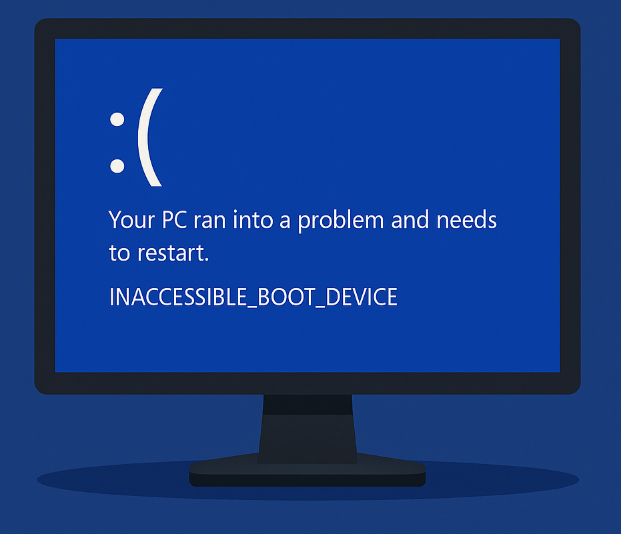
INACCESSIBLE BOOT DEVICE error
You swapped out your old mechanical hard drive for a blazing‑fast SSD or NVMe, the cloning process went off without a hitch, and you hit the power button full of anticipation. Instead, you’re greeted by a blue screen screaming INACCESSIBLE_BOOT_DEVICE. The system refuses to boot, every restart lands on the same error, and that clone that looked perfect now makes Windows act like the boot drive suddenly vanished into thin air.
This blue screen appears because Windows can’t read the system partition on your cloned drive during startup. The root cause is almost always a mismatch between the hardware configuration Windows was originally installed on and the environment the clone now faces. This isn’t a random crash—the error means the boot loader can’t reach the storage controller or file system as expected. Fortunately, once you pinpoint the mismatch, the solution is rarely complicated, and in most cases you can recover without losing any data.

What Causes INACCESSIBLE_BOOT_DEVICE After Cloning Your Drive

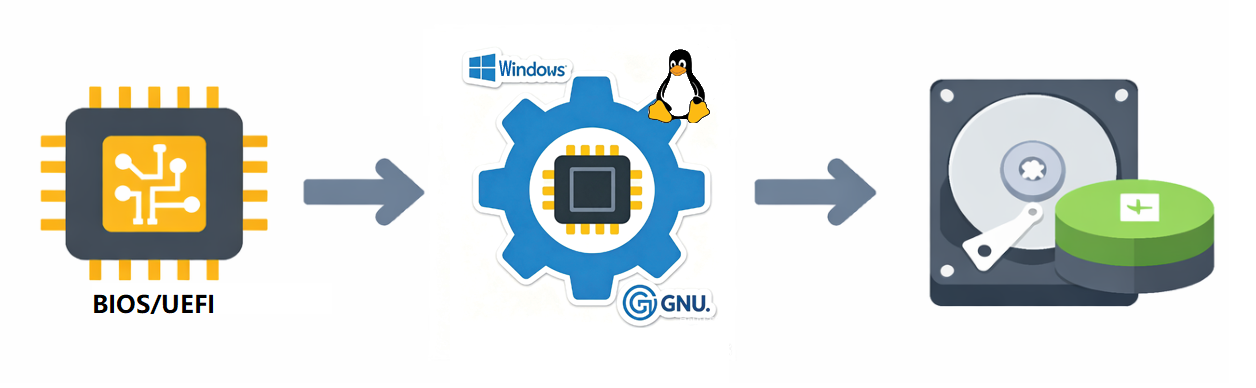
When Windows boots, it follows a sequence: the firmware locates the boot loader, loads the right storage driver, and mounts the system volume.
boot sequence
Cloning can disrupt this chain in several ways. The table below summarizes the most common causes, the scenarios where you’ll encounter them, and where to focus your troubleshooting.
CauseTypical ScenarioTroubleshooting Focus

UEFI/Legacy boot mode mismatch

Cloned a Legacy (MBR) disk but the target system is set to UEFI only, or vice versa

BIOS boot mode, CSM, Secure Boot

AHCI/RAID/VMD or SATA controller change

Migrated from a SATA SSD to an NVMe drive, or switched from AHCI to Intel RST/VMD

SATA Operation, VMD, RAID-to-AHCI switch in firmware

Missing or broken EFI/Boot files or BCD configuration

Cloning software missed copying the ESP or system partition, or the Boot Configuration Data points to the wrong disk

BCD rebuild, boot file repair, disk signature issues

Missing NVMe or storage controller drivers

Windows 10 or 11 installation lacked the built-in NVMe driver for the new hardware, especially on Intel 11th-gen and newer systems with VMD

Driver injection, Safe Mode fallback, or fresh clone with driver alignment

Old drive still connected causing bootloader confusion

Both source and cloned drives are attached, and firmware loads the boot loader from the wrong disk

Disconnect the old drive, check boot order

*References: Microsoft Learn documentation on boot process and stop codes, Intel platform VMD configuration guides, and UEFI specification resources.*¹
Renee Becca – Safe and Quick System Migration to SSD

Automatic 4K alignment Improves SSD performance during system migration.

Support GPT and MBR Automatically adapt to the suitable partition format.

Support NTFS and FAT32 Redeploy various files in different file systems.

Back up quickly Back up files at up to 3,000MB/min.

Overall backup schedule Support system redeployment/system backup/partition backup/disk backup/disk clone.

Automatic 4K alignment Improve SSD performance

Support GPT and MBR Intelligently adapt to a partition format

Support NTFS and FAT32 Redeploy files in different file systems

Free TrialFree TrialNow 56337 people have downloaded!

Try These Fixes First, in the Safest Order

Before diving into command prompts or re-cloning, go through this checklist. Each action is non-destructive and often resolves the boot device error in minutes.
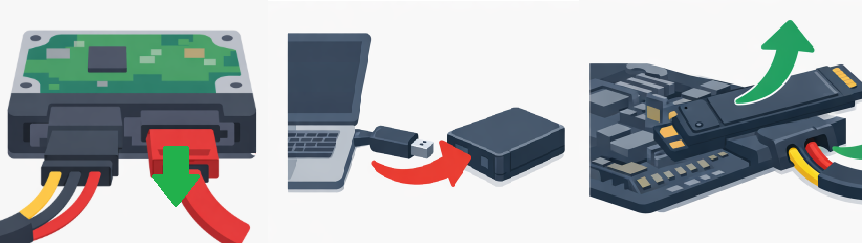
- Physically disconnect the old/original drive and try booting from the clone.
If the system boots, the bootloader was pointing to the old disk. Adjusting boot order
lenovo laptop In the BIOS menu, navigate to the startup tab.
or simply removing the old drive may solve the issue.
Unplugging SATA cable from a hard drive
- Ensure the cloned drive is set as the first boot device in BIOS/UEFI.
If you see the Windows logo from the cloned drive, the boot order is correct—even if the old drive is disconnected.
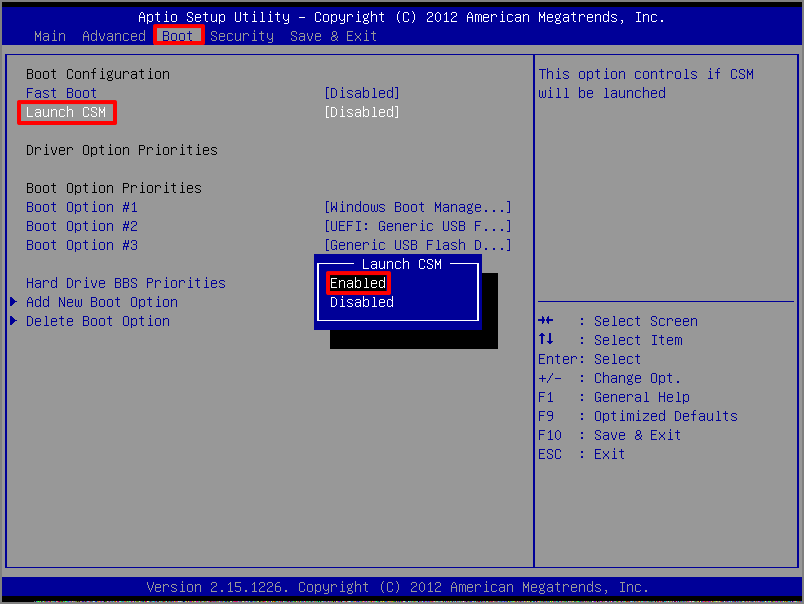
- Verify boot mode consistency: match UEFI (GPT) or Legacy (MBR) and adjust CSM settings as needed.
If Windows starts to load but BSODs quickly, switching between UEFI and CSM/Legacy can allow the kernel to proceed.
choose enabled in launch csm to sovle windows 10 won't boot from USB
- Check SATA Operation / VMD / RAID mode; temporarily switch to AHCI or disable VMD to test.
If switching to AHCI lets the clone boot, the original install lacked the RAID/VMD driver. You can inject it or stay with AHCI.
WinRE gives you access to Startup Repair and BCD tools that can automatically fix broken boot configurations.

Step-by-Step Repair for a Cloned SSD or NVMe That Won’t Boot

Follow these progressive, standalone fixes using only Windows native tools and the Recovery Environment. Work through them in order, as each assumes you’ve already tried the previous steps.

1. BIOS/UEFI Adjustments That Often Resolve the Error Immediately

Restart your computer and press the key for firmware settings—typically F2, Del, F10, or Esc. If unsure, check the startup screen prompt or your motherboard manual.
Inside the setup utility, look for the Boot tab and SATA / NVMe Configuration or Storage section. Labels vary, but these settings are present on nearly all modern PCs.
Snap a photo of your original settings before making changes.

Boot mode (UEFI vs. Legacy/CSM)

Check if your cloned drive uses GPT or MBR (you can confirm later in WinRE). Set firmware to UEFI for GPT clones or Legacy/CSM for MBR clones. Most recent systems default to UEFI.

SATA controller mode

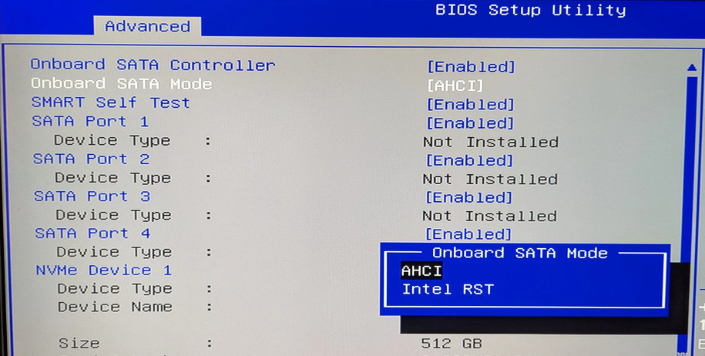
Find SATA Operation, SATA Mode, or Storage Controller Mode. Typical values: AHCI, RAID, or Intel RST with Optane. If your system was set to RAID or Intel RST, try switching to AHCI and see if the clone boots. On 11th-gen and newer Intel laptops, Intel VMD may be enabled; disabling it forces the standard NVMe controller, which often allows a cloned Windows to boot without the VMD driver.
SATA Controller mode

Secure Boot

Some non-UEFI clones won’t boot if Secure Boot is on. Try disabling it, then re-enable after a successful boot.

2. Attempt to Enter Safe Mode to Force Driver Installation

Safe Mode loads only essential drivers, which can prompt Windows to recognize the new storage controller and install the required driver automatically. If you reach the sign-in screen in Safe Mode, a normal restart may resolve the boot error for good.
To access Startup Settings and Safe Mode, you’ll need to enter the Windows Recovery Environment. Since the clone won’t boot, the easiest way is with a Windows installation USB(or DVD) that matches your version.
1. Create installation media: Download Microsoft’s official Media Creation Tool and make a bootable USB flash drive (8 GB or larger).
Windows 10 : https://www.microsoft.com/software-download/windows10

Windows 11 : https://www.microsoft.com/software-download/windows11

2. Boot from the USB: Insert it, restart, and press the boot menu key (F12, F9, or Esc, depending on your hardware) to select the USB.
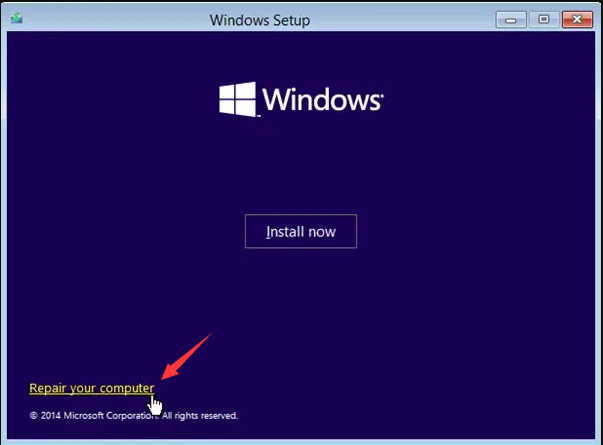
3. On the “Windows Setup” screen, click Next, then select Repair your computer.
Windows Setup – Install now screen with Repair your computer link
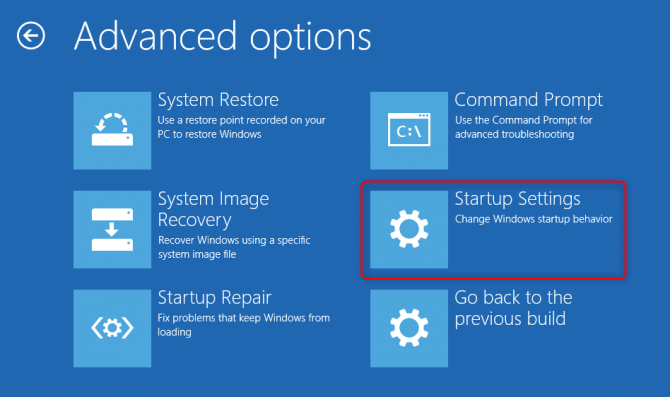
4. Go to TroubleshootAdvanced optionsStartup Settings.
select startup settings in advanced options
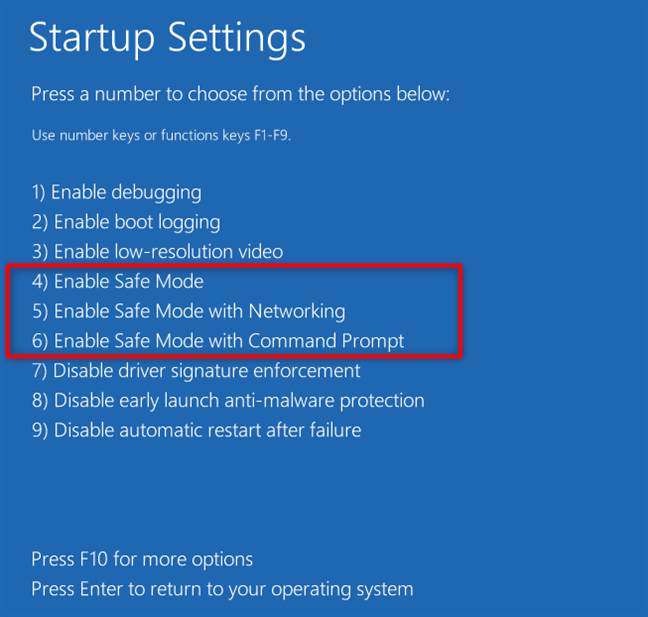
5. Click Restart, then choose 4 or F4 to enable Safe Mode.
startup settings windows 10 safe mode
If Windows loads in Safe Mode, the critical storage driver was installed during boot. Restart normally—often, the BSOD disappears after this.

3. Run Startup Repair from Windows Recovery Environment

Startup Repair can automatically detect and fix corrupted boot configuration data, missing boot files, and disk signature conflicts—all common after a clone.
1. Boot from the Windows installation media as above and select Repair your computerTroubleshootAdvanced options.
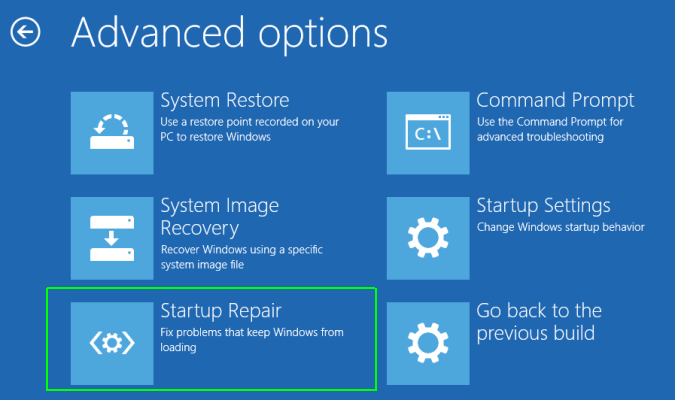
2. Choose Startup Repair.
Windows Advanced Options menu with Startup Repair selected
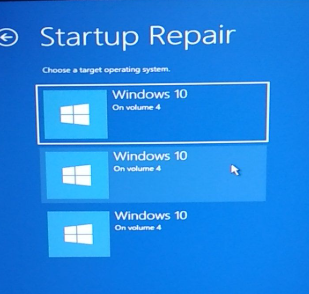
3. Select your operating system (usually the cloned Windows). The tool will scan and attempt repairs.
startup repair choose system
4. When finished, restart. If the BSOD persists, run Startup Repair a second or even third time—multiple passes can resolve hidden dependencies.

4. Rebuild the Boot Configuration Data (BCD) and Repair EFI Files

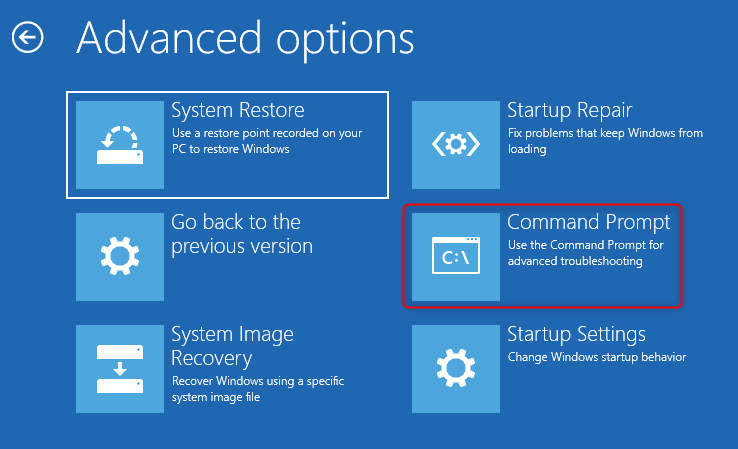
If the boot loader is damaged or pointing to the wrong partition, manual commands are often the fastest solution. Boot from the Windows Installation Media, from Advanced options in WinRE, open Command Prompt and follow the steps for your system layout.
Windows Recovery Environment Advanced options screen, with Command Prompt tile selected
First, identify the correct disk letters:

diskpart
list disk
select disk 0
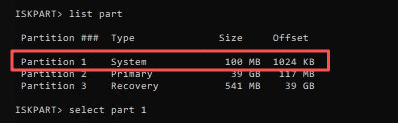
list partition

select efi partiton
You should see, for a UEFI/GPT system, a small EFI System Partition(ESP) (typically 100–500 MB) and a larger Windows partition. Assign drive letters as needed:

select partition X (replace X with the Windows partition number)
assign letter=C
select partition Y (replace Y with the ESP number)
assign letter=S
exit

For Legacy/MBR systems:

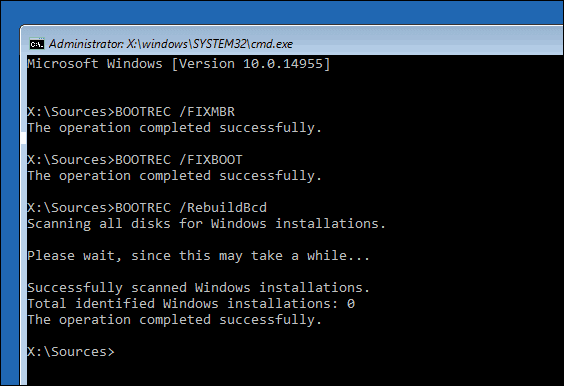
bootrec /fixmbr
bootrec /fixboot
bootrec /rebuildbcd

When prompted after the rebuild scan, type Y to add the detected installation.
Command Prompt showing execution of bootrec /fixboot command
For UEFI/GPT systems:

bcdboot C:\Windows /s S: /f UEFI

This copies necessary boot files to the ESP and recreates BCD entries. Running bootrec /rebuildbcd afterward is a good safety measure.
Restart and test the clone. If commands complete with no errors but the BSOD remains, your boot files are healthy—the issue is likely a missing storage controller driver.

5. When Re-Cloning Is the Next Move

If you’ve adjusted firmware, repaired boot structures, and Safe Mode still won’t load Windows, the problem is almost certainly a missing or incompatible storage driver. This is especially common when cloning from SATA to NVMe, or on systems using Intel VMD or proprietary RAID controllers.
You now have two main options.

Inject the correct driver

The first is to manually inject the correct driver into the cloned Windows image: boot into WinPE, locate the right NVMe or storage controller driver (iaStorVD, RST, etc.), and use dism to add it to the offline Windows install. This requires some technical comfort and knowing your target chipset.

Re-clone using software

The second option is to re-clone using software that handles partition alignment, driver detection, and boot configuration migration automatically. Tools designed for system migration can prevent driver mismatches from the start.
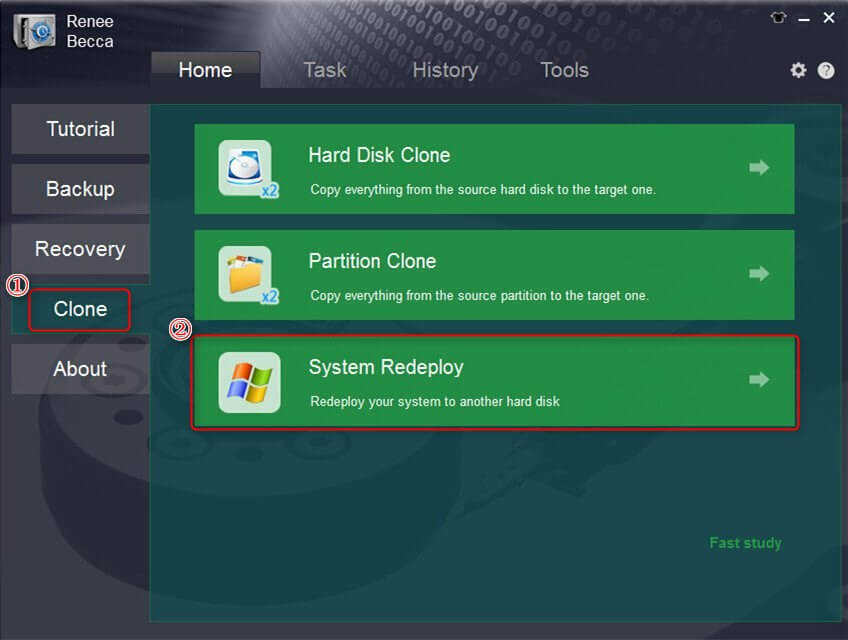
For a simpler process, Renee Becca offers a system migration mode that aligns the clone with your target hardware, detects necessary storage drivers, and prepares boot entries—making the cloned drive bootable even across different controller types. After re-cloning, follow the verification steps below.
Renee Becca – Safe and Quick System Migration to SSD

Automatic 4K alignment Improves SSD performance during system migration.

Support GPT and MBR Automatically adapt to the suitable partition format.

Support NTFS and FAT32 Redeploy various files in different file systems.

Back up quickly Back up files at up to 3,000MB/min.

Overall backup schedule Support system redeployment/system backup/partition backup/disk backup/disk clone.

Automatic 4K alignment Improve SSD performance

Support GPT and MBR Intelligently adapt to a partition format

Support NTFS and FAT32 Redeploy files in different file systems
Free TrialFree TrialNow 56337 people have downloaded!
Renee Becca System Redeploy option selected for OS-only migration
Before proceeding with either option, ensure you have a complete backup of your original disk so you can revert if needed.

How to Confirm the Clone Boots Correctly After the Fix

You’ll know your fix worked when you see the Windows lock screen or desktop without a blue screen. To be sure your cloned drive is fully functional, check the following:
- Open Disk Management (diskmgmt.msc) and verify that the cloned drive shows the correct system partitions: an EFI System Partition for UEFI, or Active, System status for MBR. The Windows partition should be marked as Boot.
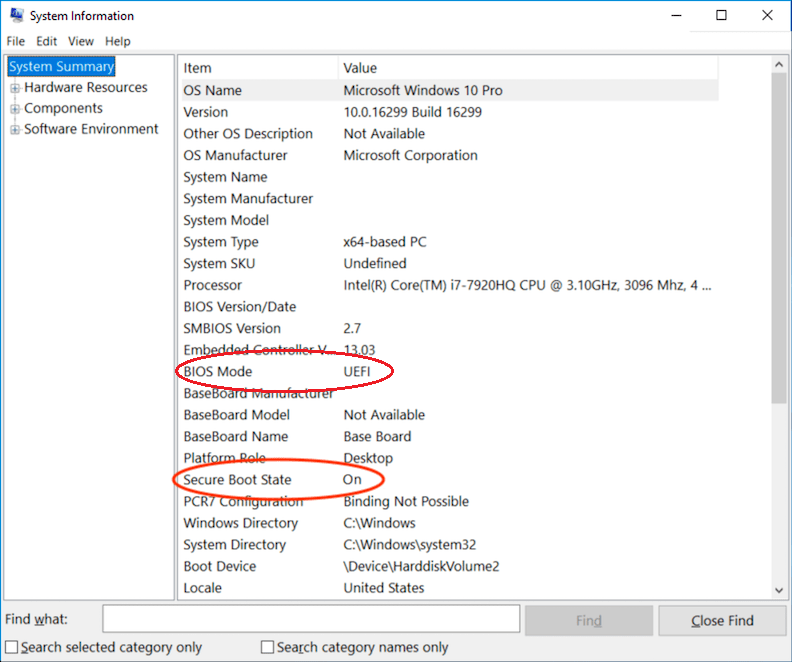
- Run msinfo32 and check the BIOS Mode—it should match your intended UEFI or Legacy setting, confirming the boot chain is consistent.
System Information dialog showing UEFI boot mode and Secure Boot status
- Once you’ve confirmed stability, you can reconnect the old drive for extra storage or backup. Just make sure the cloned drive remains first in the BIOS boot order.
Before wiping the source disk, follow this quick prevention checklist:
- Keep a full disk image or backup of the old drive in a safe place.
- Verify that Windows activation and any encryption (BitLocker) are intact. BitLocker may prompt for a recovery key when booting from a clone, so have your key ready.
- Download and install the latest storage and chipset drivers from your PC or motherboard manufacturer’s support page.
- If you injected a driver manually, make note of which driver was added for future reference.

FAQ

Why does the clone work on one PC but throw INACCESSIBLE_BOOT_DEVICE on another?

Windows configures its boot stack for the storage controller and hardware abstraction layer of the original machine. Moving the clone to a different system—especially one with a different chipset, NVMe controller, or BIOS setting—means the required drivers may be missing, causing the stop code. Fixes usually involve adjusting the target’s firmware to match the clone or injecting the missing driver.

Can I fix the error without a Windows installation disc or USB?

If the clone loops back to the blue screen before reaching the Advanced startup menu, you’ll usually need bootable media. Sometimes you can trigger WinRE by interrupting boot three times (forcing auto-repair), which may let you access the command prompt without a USB—provided the recovery partition is present and working.

Will disconnecting the old drive delete my data or affect the clone?

No. Removing the source drive does not change data on either disk. It simply prevents bootloader conflicts. Once the clone boots independently, you can reconnect the old drive as a secondary disk—just make sure the BIOS boot order favors the cloned drive.
Renee Becca – Safe and Quick System Migration to SSD

Automatic 4K alignment Improves SSD performance during system migration.

Support GPT and MBR Automatically adapt to the suitable partition format.

Support NTFS and FAT32 Redeploy various files in different file systems.

Back up quickly Back up files at up to 3,000MB/min.

Overall backup schedule Support system redeployment/system backup/partition backup/disk backup/disk clone.

Automatic 4K alignment Improve SSD performance

Support GPT and MBR Intelligently adapt to a partition format

Support NTFS and FAT32 Redeploy files in different file systems
Free TrialFree TrialNow 56337 people have downloaded!

User Comments

Page 1

Leave a Comment


Your comment has been submitted and is awaiting moderation.